Sourcing garments from Bangladesh works best as a staged process: define the product and a target cost, decide how you will work with suppliers, verify factories, compare like-for-like quotes, approve samples, then manage production, inspection and shipping against a written plan. Bangladesh is one of the world's major apparel exporters, with particular depth in cotton knitwear, denim, woven shirts and bottoms, and basics made at volume.
This guide walks through each stage from the buyer's side of the table. It is written for sourcing managers and brand founders who know their product and want a practical framework for working with Bangladeshi manufacturers, directly or through a sourcing partner such as our team.
Key takeaways
- Start with a complete tech pack and a target FOB price; missing specs are a frequent cause of inaccurate quotes.
- Choose a sourcing model deliberately: direct factory, sourcing agent and trading company trade control, cost and workload differently.
- Compare quotes line by line (fabric, trims, CM, washing or printing, testing, packing, Incoterm), not by the headline price.
- Expect several sampling rounds before bulk; each round commonly adds one to three weeks.
- Agree payment terms, Incoterm, AQL levels and the inspection plan in writing before production starts.
Step 1: Prepare a tech pack and a target cost
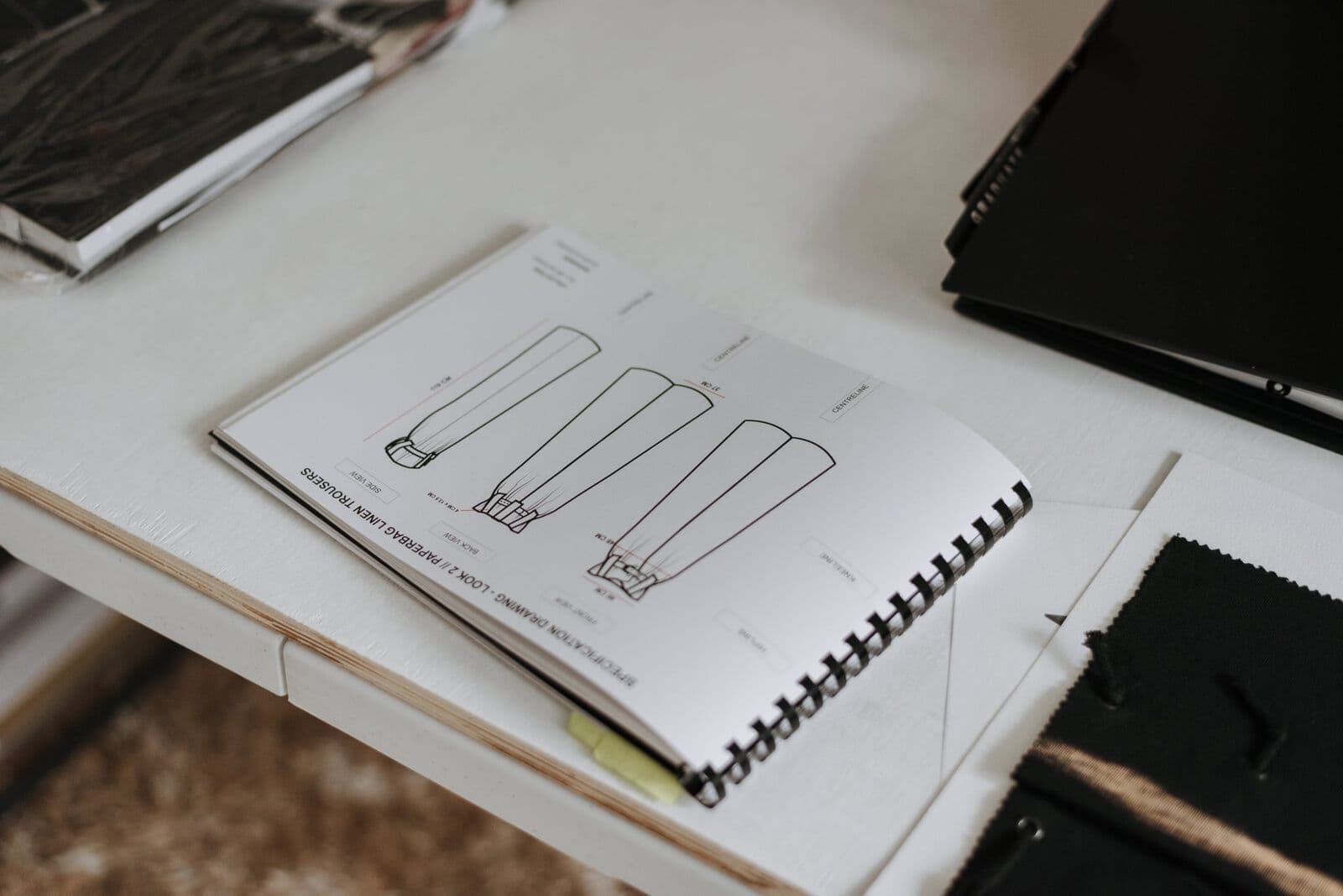
The most useful thing a buyer can do before sending an inquiry is to finish the tech pack. Factories quote what they can see. When fabric, trims or construction details are missing, they either add a margin for the unknowns or quote low and revise after sampling.
A quote-ready tech pack usually includes:
- Flat sketches with construction callouts such as stitch types, seam finishes and topstitching.
- Measurement specification with points of measure (POMs), base size, grading and tolerances.
- Bill of materials (BOM) covering fabric composition, construction and weight, plus every trim: thread, labels, buttons, zippers, elastic, hangtags and polybags.
- Colorways referenced to a recognized color standard or a physical swatch.
- Artwork and placement for prints or embroidery, with sizes and positions.
- Wash, finish and packing instructions, including folding, assortment and carton marks.
Alongside the tech pack, set a target FOB price per unit, worked back from your selling price, margin and landed-cost assumptions for freight, insurance, duty and clearance. A target is a planning tool, not a demand: it shows the factory where to look for savings, such as a lighter fabric or a stock trim. Our fabric guide explains how to specify fabric precisely enough to quote.
Direct factory, sourcing agent or trading company: which model fits?
Each sourcing model can work well; the right one depends on your volume, in-house expertise and how much time your team can spend managing factories. The comparison below is deliberately balanced, and many buyers combine models.
| Factor | Direct with factory | Sourcing agent | Trading company |
|---|---|---|---|
| How it works | You contract and communicate with the manufacturer yourself. | An agent finds, vets and follows up factories for you, usually for a commission or service fee. | The trader buys from factories and resells to you. |
| Price transparency | High: you see the factory price. | Generally high if the agent shares factory quotes and discloses its fee. | Lower: the trader's margin is built into the price. |
| Control over factory choice | Full, but limited to factories you can find and assess. | Shared: the agent proposes options and you decide. | Limited: the producing factory may not be disclosed. |
| Workload for your team | Highest: vetting, follow-up, QC and logistics sit with you. | Moderate: local follow-up and inspection are delegated. | Lowest: the trader manages most execution. |
| Best suited to | Established buyers with steady volume and an in-house sourcing team. | Brands that want factory visibility without a local office. | Buyers who prefer one counterparty and accept less visibility. |
| Main risks | Communication gaps and thin QC coverage at a distance. | Agent quality varies; check independence, fees and conflicts of interest. | Undisclosed subcontracting and less leverage on quality issues. |
How to shortlist and vet garment factories
Shortlist by product fit first, then verify that each factory is legitimate, compliant and able to make your style at your quantity. A factory that excels at heavyweight fleece may be a poor fit for fine woven shirting. Our factory matching service follows the same checks.
- Product and fabric fit
- Ask for samples or photos of comparable styles made recently, the fabrics handled and usual order sizes. Match knit, woven, sweater and denim specialists to the right product.
- Legal and export status
- Confirm business and export registration. Many garment exporters are members of BGMEA or, for knitwear, BKMEA; membership can be checked with the association.
- Social and building safety compliance
- Request recent third-party audit reports, such as amfori BSCI, SMETA, WRAP or SA8000, and ask about building, fire and electrical safety programs. Read open findings, not only the certificate.
- Capacity and in-house processes
- Check sewing lines suited to your product, which processes are in-house or outsourced (dyeing, printing, embroidery, washing) and loading during your delivery window.
- Quality systems and certifications
- Look for documented inline checks, measurement routines and needle control. For claims such as OEKO-TEX STANDARD 100, GOTS, OCS or GRS, confirm scope and validity in the certification body's public database.
- Subcontracting policy
- Agree in writing which processes may be subcontracted, to which units, and that unauthorized subcontracting is not permitted.
What drives the FOB price in a garment quote
Compare quotes by cost component, not by the headline number. Send every factory the same tech pack, quantity, size split, color count, Incoterm and port, and ask for a cost breakdown. Differences usually trace back to one of the drivers below. For how quantity affects price, see the MOQ guide.
| Cost driver | What it includes | What to check |
|---|---|---|
| Fabric | Yarn, knitting or weaving, dyeing, finishing and consumption per garment including cutting waste. | Composition, weight, width and finish match your spec; consumption is realistic. |
| Trims | Thread, labels, buttons, zippers, elastic, hangtags, polybags and cartons. | Nominated trims versus factory-sourced equivalents; custom trim minimums. |
| CM (cut and make) | Labor and overhead for cutting, sewing and finishing, driven by minutes per garment. | Construction complexity; CM compared across factories for the same style. |
| Washing, printing, embroidery | Garment washes, finishes, prints, embroidery and their set-up costs. | Print colors, artwork size, wash recipe, in-house or subcontracted. |
| Testing | Fabric and garment performance tests and chemical testing. | Which tests are included, which lab, and who pays for retests. |
| Packing | Folding, polybags, hangers, stickers, inner and master cartons. | Packing method and carton spec match your warehouse needs. |
| Freight terms | Inland haulage, export clearance and, depending on the Incoterm, main freight and insurance. | Named Incoterm and place, for example FOB Chattogram. |
| Overhead and margin | Factory overhead, financing of materials, commissions and profit. | Longer credit periods and small orders usually raise this line. |
FOB, CIF and FCA under Incoterms 2020
An Incoterm defines where the seller's delivery obligation ends, which costs each party pays and when risk passes to the buyer. Garment quotes from Bangladesh are commonly given FOB at Chattogram port.
- FOB (Free On Board): the seller clears goods for export and delivers them on board the buyer's nominated vessel at the named port. Risk passes once the goods are on board; the buyer pays main freight and insurance.
- CIF (Cost, Insurance and Freight): the seller also pays main freight and minimum insurance to the named destination port, but risk still passes on board at origin.
- FCA (Free Carrier): the seller delivers export-cleared goods to the carrier or place the buyer names, such as a forwarder's container freight station.
Under Incoterms 2020, FOB and CIF are intended for sea and inland waterway transport only. For containerized cargo, usually handed over at a terminal before loading, FCA is commonly recommended instead. State the Incoterm, edition and named place in every purchase order.
Sampling stages before bulk production
Sampling turns a tech pack into an approved physical standard. Skipping stages tends to push problems into bulk, where they cost more to fix. Names vary between buyers, but this sequence is typical. See sample development.
- 01
Proto or development sample
Checks pattern, construction and look, often in substitute fabric. Comments return as a dated comment sheet with photos.
- 02
Lab dips, strike-offs and trims
In parallel, the mill submits lab dips per color, the printer submits strike-offs and suppliers submit trims for approval against your standards.
- 03
Fit sample
Made in the base size, ideally in bulk or equivalent fabric, and reviewed on a fit model or form. Complex styles may need more than one round.
- 04
Size set
One sample per size, or a selection across the range, to confirm grading before cutting.
- 05
Pre-production (PP) sample
Made in bulk fabric and trims on the production pattern. Once approved, it is the reference for production and inspection.
- 06
Top of production (TOP) sample
Taken from early bulk output to confirm production matches the PP sample.
Placing the order and choosing payment terms
Issue the purchase order once the PP sample, fabric and trims are approved, or state which approvals are still open. The PO should reference the tech pack version, approved samples, quantities by color and size, unit price, Incoterm and named place, delivery date, AQL and packing instructions. Several payment structures are used in Bangladesh garment trade; each allocates risk differently.
- Letter of credit (LC)
- A bank undertakes to pay against compliant documents, usually under the ICC's UCP 600 rules. LCs add structure but also bank charges and strict document checks. Many exporters open back-to-back LCs for imported fabric against the buyer's LC, so LC timing can affect fabric lead times.
- Telegraphic transfer (TT) with deposit and balance
- A deposit at order confirmation and the balance before shipment or against copy documents. Simple and low cost, but the buyer carries risk on the deposit, so it suits verified suppliers.
- Documentary collection (D/P or D/A)
- Banks release documents against payment or against acceptance of a bill payable later, usually under the ICC's URC 522 rules. Bank involvement and protection are both lower than with an LC.
- Open account
- The supplier ships and invoices with payment due after an agreed period, usually only in long relationships.
- Linking payment to quality
- Whatever the method, tie final payment or document release to a passed final inspection where possible.
Production follow-up, inspection and shipping
Once the order is placed, the work shifts from development to control. A shared time and action (T&A) calendar listing every milestone and owner shows delays while they can still be recovered. See production management.
- 01
Confirm materials in-house
Track knitting or weaving, dyeing, finishing, fabric testing and trim arrival. Late fabric is one of the most frequent causes of late shipments.
- 02
Hold the pre-production meeting
Factory merchandising, production and quality teams review the PP sample, open comments, critical operations and packing before cutting.
- 03
Inspect during and after production
Inline checks and a during-production inspection catch recurring defects early; a final random inspection with AQL sampling follows when goods are mostly packed. See the garment quality control guide.
- 04
Book freight and prepare documents
Book with your forwarder for FOB or FCA, or confirm the factory's booking for CIF. Typical documents include the commercial invoice, packing list, bill of lading or air waybill, and origin documentation where a preference is claimed.
- 05
Verify trade preference status
Bangladesh is scheduled to graduate from UN least developed country (LDC) status on 24 November 2026. Schemes such as the EU's Everything But Arms, the UK's Developing Countries Trading Scheme and Canada's LDC tariff have or may have transition arrangements, so verify current status with the official source or a licensed customs broker. See importing from Bangladesh.
Indicative timeline from tech pack to delivery
The ranges below are indicative for a new style in mill-dyed fabric. Timing depends on fabric, product complexity, factory loading, season and destination, and is confirmed in the quotation and T&A calendar. Repeat styles can move faster, and stages overlap in practice.
| Stage | Indicative duration | What can extend it |
|---|---|---|
| Tech pack review, RFQ and quotes | About 1–3 weeks | Incomplete specs, many styles, no target price |
| Proto and fit sampling | About 2–6 weeks | Multiple fit rounds, substitute fabric, courier time |
| Lab dips, strike-offs, trims | About 1–3 weeks, in parallel | Difficult shades, metamerism, custom trims |
| PP sample and order confirmation | About 1–3 weeks | Bulk fabric not ready, open comments |
| Bulk fabric production and testing | About 3–8 weeks | Custom construction, imported fabric, failed tests |
| Cutting, sewing, finishing, packing | About 3–6 weeks | Complex construction, washes or prints, loading |
| Final inspection and handover | About 1 week | Failed inspection, rework, document errors |
| Ocean transit | Often about 3–7 weeks port to port | Transshipment, congestion, seasonal peaks |
Frequently asked questions
Should I work directly with a factory or through a sourcing agent?
It depends on your volume, in-house capability and the visibility you need. Direct relationships remove a cost layer for buyers with an established sourcing team; an agent adds local vetting, follow-up and inspection for a fee. Ask any agent how it is paid. Our garment sourcing service works with partner factories vetted before use.
What information do factories need for an accurate quote?
A complete tech pack, quantity per style and color, size split, target price, Incoterm and named place, delivery date, destination market, testing requirements and packing instructions.
Which payment terms are common for garment orders from Bangladesh?
Letters of credit and telegraphic transfers with a deposit and balance are both widely used; documentary collections and open account appear in longer relationships. None is universally better: the choice depends on the relationship, order size, banking arrangements and risk appetite on each side.
Should I buy FOB or CIF?
FOB lets you appoint your own forwarder and control freight; CIF leaves freight booking to the seller while risk still passes at origin. Both are sea-only terms under Incoterms 2020, and FCA is commonly recommended for containerized goods. Compare options on a landed-cost basis.
How long does it take to source garments from Bangladesh?
For a new style in mill-dyed fabric, development, production and ocean transit together commonly take several months; the table above breaks this down by stage. For timing on your own styles, request a quote with your tech pack and target delivery date.
Sources and references
- Incoterms 2020, International Chamber of Commerce (ICC) (Official rules defining FOB, CIF, FCA and other trade terms.)
- Uniform Customs and Practice for Documentary Credits (UCP 600), International Chamber of Commerce (ICC) (Rules under which most letters of credit are issued.)
- Bangladesh Garment Manufacturers and Exporters Association (BGMEA), BGMEA
- Bangladesh Knitwear Manufacturers and Exporters Association (BKMEA), BKMEA
- LDC graduation of Bangladesh, United Nations Committee for Development Policy (Official information on graduation from least developed country status.)
- ISO 2859-1: Sampling procedures for inspection by attributes, International Organization for Standardization (ISO)
Regulations, tariffs and preference schemes change. Always confirm current requirements with the official source or a licensed customs broker.