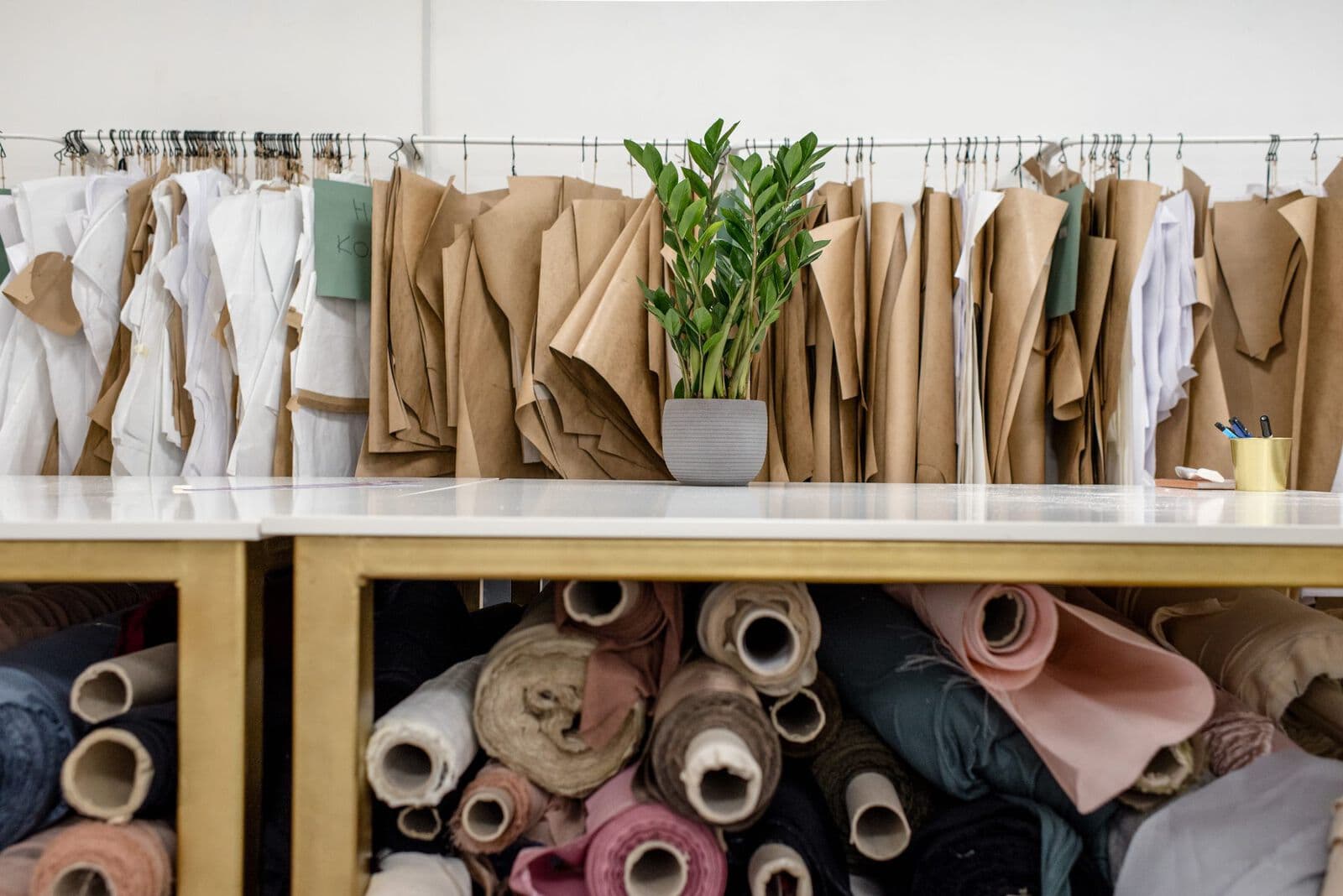
This private label clothing startup guide is for founders building a brand on outsourced manufacturing. It covers the decisions that shape the first year: which sourcing model fits your product, how to plan a collection that factories can produce at sensible quantities, where the money goes, what a tech pack must contain, how labels and branding work, and how sampling and approvals translate into a realistic launch date.
The guidance reflects how partner factories in Bangladesh, one of the world's largest apparel exporters, typically work with new brands. Bangladesh is strongest in volume categories such as knit tops, fleece, denim and basics, which suits founders building a core range. Minimum order quantities, prices and lead times always depend on the product, fabric and factory and are confirmed in each quotation.
Key takeaways
- Choose the model first: white label rebrands existing products, private label usually modifies and brands a factory's base styles, custom (OEM) produces your own designs to your tech pack, and ODM means selecting factory-developed designs.
- A focused first collection, with a few styles sharing one or two fabrics, a realistic size curve and a small color palette, is the most reliable way to meet MOQs without overstocking.
- Budget beyond the FOB price: samples, testing, labels and packaging, inspection, freight, duties and taxes, and warehousing all add to the landed cost.
- Care, fiber content and origin label rules differ by market, so confirm label text for every country you sell into before labels are printed.
- Plan roughly four to eight months from tech pack to stock in your warehouse for a first order; sampling rounds, fabric and shipping mode decide where you land in that range.
Private label vs white label vs custom (OEM) vs ODM
These terms are used loosely across the industry, so define them in writing with any supplier. The comparison reflects common usage in apparel sourcing; our private label, OEM and ODM service pages go further.
| Model | What it means | Who owns the design | How much you can change | Best suited to |
|---|---|---|---|---|
| White label | Existing, often stock or blank, products sold under your brand | The supplier | Labels, packaging and sometimes decoration | Testing a market or adding merchandise quickly |
| Private label | A factory's base styles, modified and branded for you | Shared: base pattern from the factory, changes from you | Fabric, color, trims, fit details, labels | A differentiated core range without full development |
| Custom (OEM) | Your designs produced to your tech pack and patterns | You, if the contract says so | Everything: fabric, fit, construction, trims | Brands with a defined design language and fit block |
| ODM | Factory-developed designs that you select, adapt and brand | Usually the supplier, unless rights are transferred | Limited changes to the supplier's designs | Brands that need design support or faster range building |
Plan a focused first collection
A first collection should be narrow enough to execute well and broad enough to show what the brand stands for. Many founders start with a handful of styles built on one or two fabric bases, which keeps fabric minimums manageable and makes repeats easier. A hoodie and jogger in the same fleece, or a T-shirt and long sleeve in the same jersey, share fabric, dyeing and often trims.
Size curve. Decide the size range and the ratio you will buy, for example more mediums than extra-larges, based on your target customer and any sales data. Factories usually set MOQs per style and color and then split the quantity across sizes, so a very wide size range spreads each size thin. Extended sizes may need separate grading and fit approval.
Colors. Each extra color adds a dye lot, a lab dip approval and often a color minimum. Core neutrals plus one or two seasonal colors is a common way to control risk.
First-order MOQ strategies. Factories set minimums to cover setup, dyeing and line efficiency. Approaches that often help new brands include:
- using fabrics the factory already buys rather than custom-developed fabric;
- building several styles on one fabric so the fabric minimum is met across the range;
- limiting colors per style;
- accepting a small-order surcharge on the first run, with price reviewed at repeat volumes;
- avoiding custom-dyed zips, special trims and bespoke packaging in the first order.
Our MOQ guide explains how minimums are calculated and negotiated.
Budgeting: the cost components of a first order
The FOB price is only part of the cost of a first order. A realistic budget covers every component below. Amounts depend on product, quantity, fabric, market and shipping mode, and are confirmed in quotations from the factory, forwarder and customs broker.
| Cost component | What it covers | What drives it |
|---|---|---|
| Garment price (FOB or FCA) | Fabric, trims, cut-make-trim, factory overheads and margin, delivery to the agreed point | Fabric type and weight, construction, quantity, decoration |
| Sampling | Proto, fit, size set and PP samples, plus courier costs | Number of styles and rounds, sample fabric availability |
| Labels, tags and packaging | Brand and care labels, hang tags, polybags, boxes, barcodes | Materials, quantities, custom versus standard formats |
| Testing | Fiber content, colorfastness, shrinkage and any safety tests | Target markets, product type (children's wear needs more), number of colors |
| Inspection and sourcing support | Factory verification, inline and final inspections, coordination | Number of styles and inspections, scope of service |
| Freight and insurance | Sea or air freight, origin and destination charges, cargo insurance | Mode, volume and weight, season, Incoterms rule |
| Duties, taxes and brokerage | Import duty, import VAT or sales taxes, broker fees | Tariff classification, preference eligibility, market |
| Warehousing and fulfillment | Receiving, storage, pick and pack, returns | Units, number of SKUs, 3PL pricing model |
| Contingency | Extra sample rounds, air freight to recover delays, rework | How many first-time decisions you are making |
Tech pack essentials
A tech pack is the instruction set factories quote, sample and produce from. It does not need expensive software, but it must be precise; a complete tech pack shortens sampling and reduces disputes.
- Flat sketches
- Front, back and detail views drawn to scale, with callouts for seams, stitching, pockets and closures.
- Measurement specification
- Points of measure with how-to-measure notes, the base size, a graded chart for every size and a tolerance for each point.
- Bill of materials
- Fabric (content, construction, weight, finish), trims, thread, labels, tags and packaging, each with a specification or supplier reference and color.
- Construction details
- Stitch types, stitches per inch, seam types and allowances, hem finishes and reinforcements such as bartacks.
- Artwork and placement
- Print and embroidery files with dimensions, color references, technique and placement measured from fixed points.
- Colorways
- Each color with its reference standard, and which components change color in each colorway.
- Labeling, packing and compliance
- Label positions and content, folding, polybag, carton assortment and marks, plus required tests, your restricted substances list and target markets.
Branding elements and market-specific labels
Branding is part of the product specification, and several elements are legally regulated. Keep a label approval sheet in the tech pack and confirm content for each market before ordering.
- Brand labels
- Woven labels give a durable, premium look; printed satin or heat-transfer labels are softer against the skin and suit T-shirts and activewear. Specify size, fold, attachment method and position.
- Care and content labels
- Rules differ by market. In the US, FTC rules require fiber content, country of origin, manufacturer or dealer identity and care instructions. In the EU, fiber composition labeling is mandatory under the Textile Labelling Regulation, while care symbols follow voluntary standards. Canada requires fiber content in English and French plus dealer identity, and the UK and Australia have their own rules, including a mandatory care labeling standard in Australia. See our country pages and check with the official regulator.
- Hang tags
- Carry brand story, price and barcode. Specify board weight, finish, fastener and attachment point.
- Packaging
- Polybags, tissue, boxes and mailers. Check warning text, material and recycled-content rules in your markets, as packaging and producer-responsibility rules are tightening in several of them.
- Barcodes and GS1
- Retailers and most marketplaces expect GTINs licensed from GS1, usually shown as UPC-A barcodes in North America and EAN-13 elsewhere, with one number per style, color and size. License them from your GS1 member organization rather than resellers, and give the factory the barcode file for each SKU.
Sampling and fit approval
Sampling turns the tech pack into an approved product. Expect more rounds on a first collection than in later seasons, because the fit block, fabric and trims are all new. Our sample development team runs this process with partner factories.
- 01
Brief the factory
Share the tech pack and any reference garment. The factory confirms fabric options, flags construction concerns and quotes.
- 02
Review the proto
Check overall look, construction and proportions. Do not judge color or hand feel on substitute fabric.
- 03
Approve the fit
Try the fit sample on a fit model who matches your base size, measure every point against the spec and send comments with photos. Change one variable at a time where possible.
- 04
Approve color, artwork and trims
Approve lab dips under your agreed light source, then strike-offs, labels and trims, in parallel with fit.
- 05
Check the size set
Measure samples across the size range to confirm grading, especially for extended sizes.
- 06
Sign off the PP sample
Approve the PP sample in bulk fabric and trims, with written comments. It is the standard the order will be inspected against; see our overview of the garment manufacturing process.
Indicative timeline for a first private label order
Stages overlap, and the slowest part is usually sampling and approvals rather than production. These ranges are indicative for a first order from Bangladesh; confirmed timings come with the quotation and production schedule.
| Stage | Indicative duration | What can shorten it |
|---|---|---|
| Design and tech pack | 2–6 weeks | Reference garments, a technical designer, an existing fit block |
| Factory matching and quotation | 1–3 weeks | Clear target price, quantities and markets |
| Proto and fit sampling | 3–8 weeks, often 2–3 rounds | Fast, consolidated feedback and a consistent fit model |
| Lab dips, trims, labels and packaging | 2–5 weeks, in parallel with sampling | Standard trims and stock label formats |
| Size set and PP approval | 1–3 weeks | Bulk fabric ready early, quick sign-off |
| Bulk production | Often 6–10 weeks after PP approval | Stock or local fabrics, simple construction |
| Final inspection and shipping | About 1 week by air or 4–8 weeks by sea, plus clearance | Early booking, air freight for part of the order |
Common mistakes first-time founders make
Most first-order problems are predictable:
- Too many styles and colors, which spreads the budget thin and pushes each SKU below sensible minimums.
- An incomplete tech pack, leaving the factory to make decisions you later reject.
- Approving on photos alone instead of measuring and wearing physical samples.
- Printing labels before checking market rules for fiber content, care, origin and importer details.
- Ignoring landed cost, so freight, duties and fulfillment erase the margin.
- Skipping final inspection on the first order, when the risk of misunderstanding is highest.
- No written agreement on ownership of patterns, artwork and technical files.
Launch checklist
Before confirming the purchase order, check that each item is in place.
- Model and ownership
- Private label, OEM or ODM terms and ownership of patterns and artwork agreed in writing.
- Approved PP samples
- Signed off for every style and color, with comments recorded.
- Labels and barcodes
- Care, content and origin text checked for each market; a GTIN assigned to every SKU.
- Test plan
- Tests booked for your markets and product type, with results due before shipment.
- Purchase order
- Quantities by size and color, price, Incoterms rule, delivery date, packing instructions and inspection terms.
- Logistics
- Forwarder appointed, customs broker briefed and warehouse ready to receive; see importing clothing from Bangladesh.
- Quality and reorders
- Final inspection booked with an agreed AQL, and a reorder trigger set based on sell-through and repeat lead time. When you are ready, request a quote.
Frequently asked questions
What is the difference between private label and white label clothing?
White label clothing is an existing product, often a stock or blank item, sold under your brand with little or no change. Private label clothing is usually produced for you from a factory's base style that you modify in fabric, color, fit details and branding. Custom (OEM) production goes further, using your own designs and tech pack.
How much does it cost to start a private label clothing brand?
There is no reliable single figure, because cost depends on product, number of styles, quantities, fabric and markets. Build the budget from its components: garment price, sampling, labels and packaging, testing, inspection, freight, duties and taxes, warehousing and a contingency, and request itemized quotes for each.
What MOQ should a clothing startup expect?
Minimums vary by factory, product and fabric. They are usually set per style and color and tend to be lower when you use fabrics the factory already buys; some factories accept smaller first runs with a surcharge. Our MOQ guide explains how minimums work, and the actual MOQ is confirmed in the quotation.
Do I need a tech pack for private label production?
For modified or custom products, yes. Even when you start from a factory base style, a tech pack records your changes, measurements, labels and packing and becomes the reference for sampling and inspection. For pure white label goods, a simpler branding and packaging specification may be enough.
Do I need my own barcodes?
If you sell through retailers or most online marketplaces, you will generally need GTINs registered to your company and licensed from your local GS1 member organization. Assign one per style, color and size, and send the barcode files to the factory before labels and tags are printed.
Sources and references
- Barcodes and Global Trade Item Numbers (GTIN), GS1
- Textile, wool and care labeling rules: business guidance, U.S. Federal Trade Commission
- Regulation (EU) No 1007/2011 on textile fibre names and labelling, European Union (EUR-Lex)
- Textile Labelling Act guidance for dealers, Competition Bureau Canada
- Textile labeling and product safety guidance, UK Government
Regulations, tariffs and preference schemes change. Always confirm current requirements with the official source or a licensed customs broker.