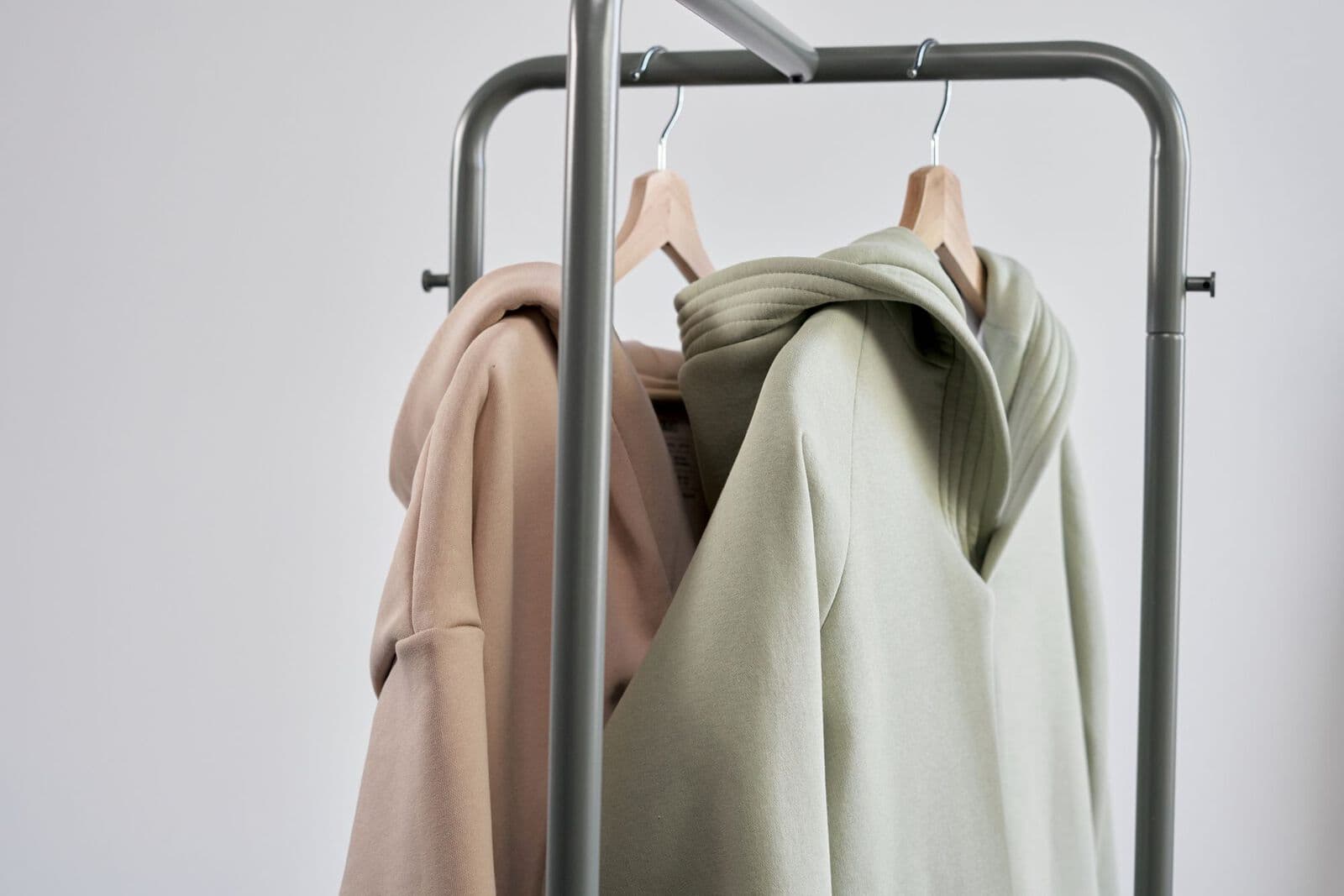
Products · Hoodies
Hoodie Manufacturer in Bangladesh for Custom and Heavyweight Hoodies
We source hoodies for streetwear labels, e-commerce brands, merchandise companies and retailers. Our sourcing team works with fleece-capable knit factories in Bangladesh and manages the program from fabric development and sampling to bulk inspection and export coordination.
A hoodie is a fleece garment with a hood, and both parts need attention. The fleece decides weight, warmth, handfeel and pilling behavior. The hood decides how the garment looks on the body: its depth, panel construction, lining and drawcord. This page explains the main choices for both, plus the zips, pockets and decoration that usually go with them.
Choose the fleece first
The fleece is the most important hoodie decision, because it sets weight, warmth, handfeel and price before any styling is added. The two main families are French terry and brushed fleece.
French terry has a looped back and a smooth face. It is lighter in feel, breathes well and suits transitional-season and washed styles. Brushed fleece is the same type of looped fabric with the loops napped into a soft, warm surface. Hoodie fleece is commonly knitted as three-thread fleece, which uses a separate backing yarn and gives more body than two-thread constructions.
Core hoodies commonly sit somewhere around 280–360 GSM, while heavyweight streetwear hoodies often go to 400 GSM and above. Heavier is not automatically better: it raises cost, shipping weight and drying time, and it changes how the hood and pocket hang.
Hoodie fleece options compared
| Fabric | Inside | Weight commonly used | Behavior | Watch-outs |
|---|---|---|---|---|
| French terry (loopback) | Visible loops | 260–340 GSM | Lighter, breathable, softens with washing | Loops can snag; check pilling on the face |
| Brushed fleece | Napped, soft | 280–360 GSM | Warm and soft from the first wear | Brushing can shed lint and increase pilling |
| Heavyweight brushed fleece | Napped, dense | 400–500 GSM | Structured, boxy drape for streetwear | Higher cost and slower production |
| CVC or poly-cotton fleece | Loopback or brushed | 280–340 GSM | Lower shrinkage, holds print well | Less natural handfeel than cotton-rich fleece |
| Recycled polyester blend fleece | Loopback or brushed | 280–360 GSM | Uses recycled content where certified | Certification and traceability need checking |
Hood and body construction to specify
- Hood panels
- Two-panel hoods are simpler and common for basics. Three-panel hoods add a center strip that gives a rounder, fuller shape favored in premium and streetwear styles.
- Hood lining
- Choose self-fabric, a contrast jersey lining or a double-layer hood. Double layers help the hood stand up and hide the seams.
- Drawcord and eyelets
- Specify cord type, width, tips and eyelets (metal or embroidered), or no drawcord at all. Many minimal designs omit the cord.
- Pockets
- Kangaroo pockets suit pullovers; split pockets or side-seam pockets suit zip hoodies. State pocket depth and placement.
- Zips
- Metal or coil, open-ended or two-way, tonal or contrast tape. Zip length must be set per size to avoid waving at the front.
- Rib cuffs and hem
- Usually 1x1 or 2x2 rib with elastane for recovery. Specify rib height and the relaxed and stretched width.
Hoodies for children need different rules
Drawcords in the hood and neck area of children's clothing are restricted or prohibited in many markets. If you plan kids' sizes, design them without hood drawcords from the start. See our kidswear page and the relevant market pages for an overview, and verify current rules with an accredited testing lab.
From sample to bulk for a hoodie drop
- 01
Fleece development
The mill knits and finishes fleece to your weight and composition and submits lab dips for each color.
- 02
Proto sample
Checks pattern, hood shape, pocket placement and overall drape.
- 03
Decoration strike-offs
Prints and embroidery are tested on the actual fleece, then washed to check cracking and puckering.
- 04
Wash and pilling tests
Shrinkage, pilling and colorfastness are checked on bulk fabric before cutting.
- 05
PP sample and size set
The pre-production sample confirms all trims and measurements across sizes.
- 06
Inline and final inspection
We arrange checks during sewing and an AQL-based final inspection before shipment.
Frequently asked questions
What is the MOQ for custom hoodies?
Fleece is knitted and dyed in batches, so MOQs are usually set per color and fabric. Heavyweight or custom fleeces often carry higher minimums than standard ones. Your MOQ is confirmed in the quotation; our MOQ guide explains the factors.
Can factories make heavyweight hoodies of 400 GSM or more?
Yes, several partner factories can develop heavyweight brushed fleece and French terry. Expect a longer fabric development time and test the fabric for shrinkage and pilling before approving bulk.
How do you control pilling and shrinkage?
Through yarn selection, fabric finishing and testing. We ask for pilling and dimensional stability tests on bulk fleece and wash-test PP samples. Some pilling on brushed cotton fleece is normal; the aim is to keep it within an agreed grade.
Can I order garment-dyed or acid-washed hoodies?
Yes. Garment dyeing and washes are done after sewing, so the pattern must allow for extra shrinkage and trims must withstand the process. Shade variation between lots is part of the look.
How long does hoodie production take?
Sampling commonly takes two to four weeks per round. Bulk production often runs seven to eleven weeks after PP approval, longer for heavyweight fleece or garment dyeing. We confirm the schedule in the quotation.
Related products
Services for this category
Buyer guides
Plan your next hoodie drop
Tell us the fleece weight, fit, hood style, decoration and quantities per color, or send a reference hoodie. We will shortlist partner factories and propose a sampling timeline that works back from your launch date.