Importing clothing from Bangladesh means coordinating three sets of rules: the commercial terms agreed with the supplier, Bangladesh's export procedures, and the customs, duty and product requirements of the country where the goods are entered. The process is well established in Bangladesh's export-oriented apparel sector, but who handles each step depends on the Incoterms rule and payment method in your contract.
This guide covers the import sequence, Incoterms 2020, documents, classification, preference schemes to verify after Bangladesh's scheduled graduation from Least Developed Country (LDC) status, shipping and payment. It is general information, not legal or customs advice; verify current requirements with the official sources below and a licensed customs broker.
Key takeaways
- Importing clothing from Bangladesh involves agreeing an Incoterms 2020 rule and payment method, production and inspection, export clearance, sea or air transit, and import clearance and duties in your market.
- For containerized garments, FCA is often a better fit than FOB, because risk can pass when the goods are handed to your carrier or forwarder rather than when they are loaded on board the vessel.
- Bangladesh is scheduled to graduate from UN LDC status on 24 November 2026; schemes such as the EU's EBA, the UK's DCTS and Canada's LDCT have or may have transition arrangements, so verify current status before pricing.
- Duty depends on correct classification: knitted or crocheted apparel falls under HS chapter 61 and apparel that is not knitted under chapter 62, with garment type and fiber content deciding the exact code.
- US duties on Bangladeshi apparel have changed repeatedly since 2025, so confirm the current treatment with a licensed customs broker before committing to a landed cost.
How the import process works, step by step
Most garment imports follow this sequence, and the first two steps decide the landed cost.
- 01
Confirm classification and duty status
Before accepting a price, have the product classified and its duty and preference position checked. A change in fiber content or construction can change the tariff line.
- 02
Agree Incoterms, payment and documents
The purchase order or contract should state the Incoterms 2020 rule with a named place, the payment method, the documents required and the inspection terms.
- 03
Produce and inspect
The factory produces against the approved PP sample, and a final inspection is commonly a condition of shipment or payment; see our garment quality control guide.
- 04
Book freight and clear export
The factory or your forwarder books space, and the exporter completes export clearance with Bangladesh Customs and bank formalities such as the EXP form.
- 05
Main carriage
Goods move by sea, air or sea-air. Under F rules the buyer contracts the main carriage; under C and D rules the seller does.
- 06
Import clearance and duties
Your customs broker files the import declaration, pays duties and taxes and presents any preference documentation.
- 07
Delivery and reconciliation
Goods are delivered and counted against the packing list; report any shortage or damage promptly to the carrier and insurer.
Incoterms 2020 for garment shipments
Incoterms 2020 rules, published by the International Chamber of Commerce (ICC), define where the seller delivers, when risk passes, and who arranges and pays for carriage, insurance and clearance. They do not cover ownership or payment. Name the place precisely, for example FCA forwarder's warehouse, Chattogram, Incoterms 2020.
FOB and CIF are for sea and inland waterway transport only. Containerized garments are usually handed over at a depot or terminal before loading, so ICC guidance points to FCA (or CPT and CIP) instead. FCA 2020 also allows the buyer's carrier to issue an on-board bill of lading to the seller, which helps under letters of credit.
| Rule | Transport mode | Delivery and risk transfer | Seller arranges and pays | Buyer arranges and pays |
|---|---|---|---|---|
| EXW | Any | Goods made available at the seller's premises, not loaded | Goods and export packing only | Loading, export clearance, freight, insurance, import clearance and duties; buyer-led export clearance is often impractical |
| FCA | Any | When goods are handed to the buyer's nominated carrier or forwarder at the named place | Export clearance and delivery to the named place (loading if it is the seller's premises) | Main carriage, insurance, import clearance and duties |
| FOB | Sea and inland waterway only | When goods are on board the vessel at the named port of shipment | Export clearance, inland transport and loading on board | Ocean freight, insurance, import clearance and duties |
| CIF | Sea and inland waterway only | On board the vessel at the port of shipment, although the seller pays freight to destination | Export clearance, ocean freight to the named port and minimum-cover cargo insurance | Destination charges as agreed, import clearance, duties and any additional insurance |
| DAP | Any | At the named destination, ready for unloading | Export clearance and carriage to the named place | Unloading, import clearance, duties and taxes |
| DDP | Any | At the named destination, cleared for import, ready for unloading | All costs and risks to the named place, including import clearance, duties and taxes | Unloading only; the seller must act as importer, which overseas factories often cannot do |
Documents you should expect
A complete, consistent document set clears goods quickly and gets letters of credit paid. Discrepancies between the invoice, packing list and transport document are a common cause of delay.
- Commercial invoice
- Parties, goods description, style numbers, quantities, unit prices, total value, currency, Incoterms rule with named place, and country of origin.
- Packing list
- A carton-by-carton breakdown of style, color, size assortment, quantity, net and gross weight and carton dimensions, matching the carton marks exactly.
- Bill of lading or air waybill
- An ocean bill of lading is a receipt, evidence of the contract of carriage and, when negotiable, a document of title, which matters under letters of credit. An air waybill is not a document of title.
- Certificate of origin and preference documentation
- Proof of origin supports preferential duty claims. Depending on the market and scheme, it may be a statement on origin made out by an exporter registered in a system such as the EU's Registered Exporter (REX) system, or another certificate or declaration. Requirements may change around LDC graduation, so confirm them with your broker.
- Inspection certificate
- A final inspection report or certificate from the buyer, its agent or a third party, often required as a condition of payment.
- Test reports
- Laboratory results for fiber content, colorfastness and shrinkage and, where applicable, restricted substances, flammability or children's product rules. Transaction certificates support organic or recycled claims (see our sustainable textiles guide).
Customs classification basics
Duty starts with tariff classification, and for apparel the first split is construction. Under the Harmonized System maintained by the World Customs Organization, chapter 61 covers apparel and clothing accessories that are knitted or crocheted, such as most T-shirts, polo shirts, hoodies and sweaters, while chapter 62 covers apparel that is not knitted or crocheted, such as woven shirts, jeans and most tailored jackets.
Within each chapter, the code depends on the garment type, whether it is for men or boys or for women or girls, and the fiber that predominates by weight. The first six digits are harmonized internationally; national tariffs add further digits, such as the Harmonized Tariff Schedule of the United States or the EU's Combined Nomenclature and TARIC, so the same garment carries different full codes in different markets.
Blends, coated fabrics and knit-woven combinations are where errors tend to occur. Give your broker the tech pack and fiber composition, and consider a binding ruling (a CBP ruling in the US, Binding Tariff Information in the EU or an Advance Tariff Ruling in the UK) for significant volumes.
Bangladesh's LDC graduation on 24 November 2026: verify before you price
Bangladesh is scheduled to graduate from the UN list of Least Developed Countries on 24 November 2026. Several markets link their most generous preferences to LDC status, and some provide transition periods for graduating countries. The length of any transition, eligibility, rules of origin and documentation are set by each market and can change. Do not rely on past duty-free treatment when calculating landed costs; check the official source and confirm with a licensed customs broker before each season.
Duty preferences by market: what to verify
The table names the main regime in each market and what to check. It gives no duty rates, because they depend on the tariff line, the scheme in force on the date of import and rules of origin. Our country pages for the USA, UK, Germany, France, the Netherlands, Canada and Australia add market-specific requirements.
| Market | Regime to check | What to verify |
|---|---|---|
| European Union (including Germany, France and the Netherlands) | Generalised Scheme of Preferences, Everything But Arms (EBA) arrangement | How the EBA transition applies to your shipment dates, any other GSP eligibility, and REX origin requirements |
| United Kingdom | Developing Countries Trading Scheme (DCTS) | Which DCTS tier and transition period apply after graduation, and the rules of origin |
| Canada | Least Developed Country Tariff (LDCT) | Whether and for how long LDCT treatment continues after graduation, and the origin proof required |
| United States | Harmonized Tariff Schedule of the United States plus any additional duties in force | The total duty on the tariff line at the date of entry; there is no general US preference for Bangladeshi apparel, and additional tariffs have changed several times since 2025 |
| Australia | Australian preferential tariff arrangements for developing countries and LDCs | Whether LDC-linked treatment continues after graduation, and the origin evidence required |
Shipping modes and indicative transit times
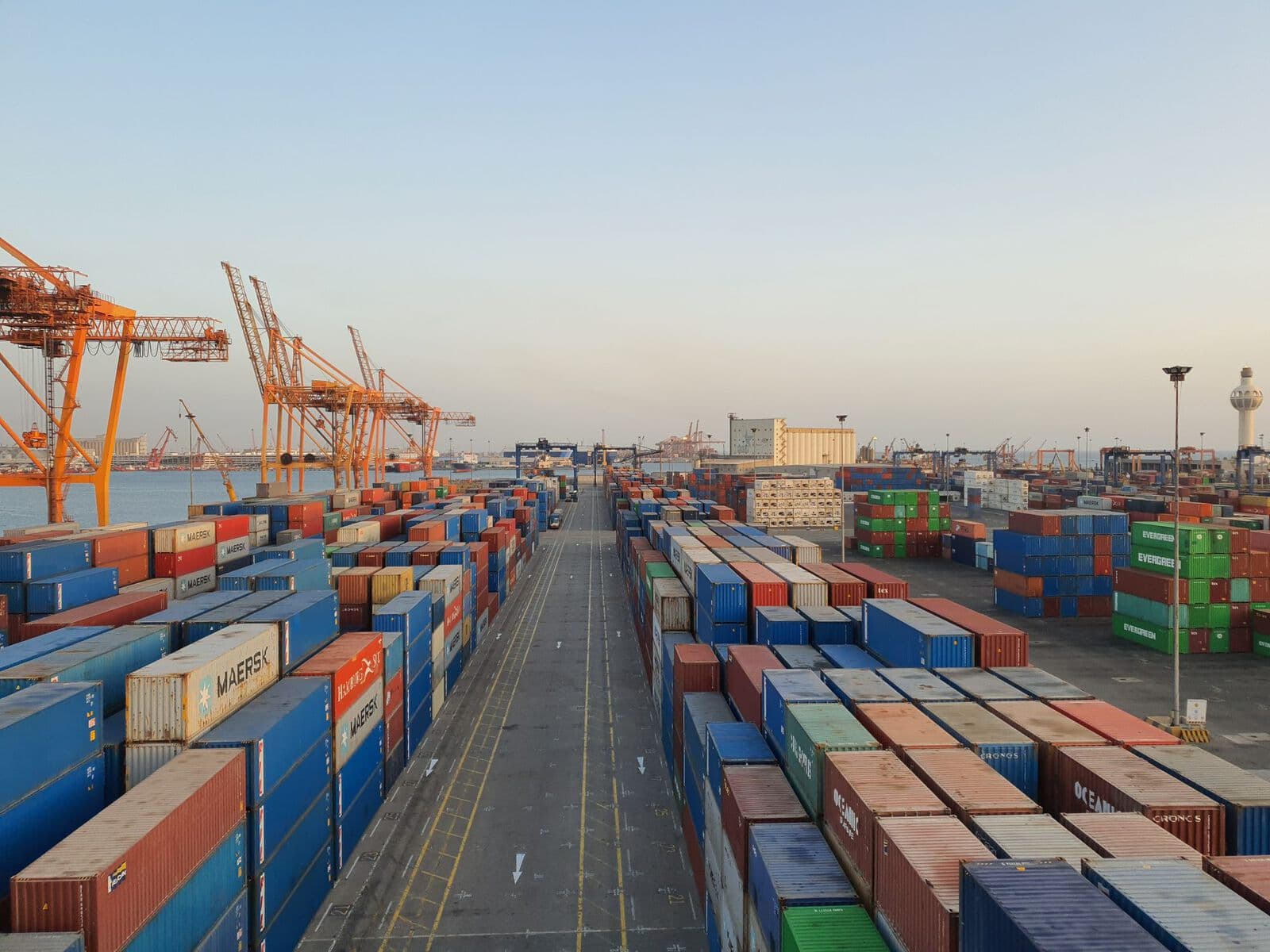
Most garment volume leaves Bangladesh by sea through Chattogram, the country's main seaport, usually on feeder vessels to transshipment hubs before connecting to mainline services. Urgent goods fly from Hazrat Shahjalal International Airport in Dhaka. Transit varies with routing, transshipment, congestion and disruptions such as Red Sea diversions, so confirm the indicative ranges below with your forwarder.
| Mode | Typical use | Indicative transit | Points to watch |
|---|---|---|---|
| Sea FCL (full container load) | Orders that fill or nearly fill a 20-foot or 40-foot container | Often around 4–7 weeks port to port to Europe or North America; Australia may be shorter | Transshipment connections, free time at destination |
| Sea LCL (less than container load) | Smaller orders consolidated with other shippers | Often a week or more longer than FCL | Consolidation time, extra handling, carton strength |
| Air freight | Samples, urgent replenishment, high-value or small orders | Often around 3–10 days door to door, depending on routing and clearance | Chargeable (volumetric) weight, peak-season capacity, cost |
| Sea-air | Medium urgency where full air freight is too costly | Often between sea and air, commonly around 2–4 weeks | Routing via hubs such as Colombo or Dubai |
Payment methods for garment imports
The main payment methods differ in how they balance buyer and supplier risk. None suits every relationship; many buyers start with documentary methods and move to open terms as trust builds.
- Letter of credit (LC)
- A bank undertakes to pay the supplier when it presents documents that comply with the credit, usually under the ICC's UCP 600 rules. LCs are widely used in Bangladesh's garment trade, where factories often use a buyer's master LC to open back-to-back LCs for imported fabric and trims. Documentary discrepancies delay payment.
- Telegraphic transfer (TT)
- A direct bank transfer, often split into a deposit and a balance before or after shipment. It is simple and inexpensive; protection depends on the payment schedule.
- Documentary collection
- Banks release shipping documents against payment (D/P) or against acceptance of a bill of exchange (D/A), commonly under the ICC's URC 522 rules. Banks handle the documents but do not commit to pay, so the risk sits between an LC and open account.
- Open account
- The buyer pays an agreed number of days after shipment or receipt, usually only in established relationships.
Compliance risk checklist before you ship
Customs duty is only part of compliance, and these risks are best addressed during supplier selection. Our export coordination and quality inspection teams collect evidence from partner factories, but legal responsibility for imported goods stays with the importer.
- Forced-labor import rules
- The US prohibits goods made with forced labor under Section 307 of the Tariff Act of 1930, and the Uyghur Forced Labor Prevention Act (UFLPA) presumes that goods made wholly or partly in Xinjiang, or by listed entities, are barred unless the importer rebuts that presumption. Map fiber and fabric origin, since inputs can come from many countries. The EU Forced Labour Regulation will prohibit products made with forced labor from the EU market and is scheduled to apply from December 2027.
- Product safety
- Children's wear carries the strictest rules, such as US CPSIA requirements for lead, phthalates, tracking labels and Children's Product Certificates. General rules such as the EU General Product Safety Regulation apply to all consumer garments.
- Chemical restrictions
- Limits such as those in EU REACH Annex XVII, which covers certain azo dyes among other substances, apply to textiles placed on the market. A restricted substances list (RSL) in the contract, backed by testing, helps manage this.
- Labeling
- Fiber content, origin, care and manufacturer or importer identification rules differ by market; our private label guide covers labels.
- Supply-chain due diligence
- Some markets require larger companies to run human rights and environmental due diligence, for example Germany's Supply Chain Due Diligence Act. Such laws have been revised, so check current obligations and keep audit records.
Frequently asked questions
Is clothing from Bangladesh duty-free?
It depends on the market, tariff line, scheme in force and rules of origin. Bangladesh has historically received LDC preferences in markets such as the EU, UK and Canada, but it is scheduled to graduate from LDC status on 24 November 2026 and transition arrangements vary. The United States applies its normal tariff schedule plus any additional duties in force. Verify current treatment with a licensed broker.
Which Incoterm is best for importing garments from Bangladesh?
No single rule suits every buyer. FOB is widely quoted, but for containerized shipments FCA at the factory or forwarder's depot is often a better fit because risk passes at handover to your forwarder. DDP is uncommon because the overseas seller would have to clear goods and pay duties in your country.
What documents do I need to import clothing from Bangladesh?
Typically a commercial invoice, packing list, bill of lading or air waybill, proof of origin or preference documentation where a preference is claimed, and any inspection certificates and test reports your market or contract requires. Your customs broker will confirm the full list for your country.
How long does shipping from Bangladesh take?
Sea freight from Chattogram often takes around four to seven weeks port to port to Europe or North America, depending on routing and transshipment; air freight from Dhaka often takes about three to ten days door to door. These are indicative ranges, so confirm schedules with your forwarder at booking.
How does a sourcing agent help with importing from Bangladesh?
A sourcing agent coordinates the supplier side: specifications, inspections, test reports, supply-chain evidence and document accuracy with your forwarder. Classification, duties and legal compliance remain the importer's responsibility, normally handled with a licensed customs broker. To discuss a program, request a quote.
Sources and references
- Incoterms® 2020, International Chamber of Commerce (ICC)
- Harmonized System nomenclature, World Customs Organization
- Importing into the United States, rulings and UFLPA guidance, U.S. Customs and Border Protection
- Developing Countries Trading Scheme and UK import guidance, UK Government
- Access2Markets: EU tariffs, GSP arrangements and rules of origin, European Commission
- Least Developed Country category and graduation, United Nations Committee for Development Policy
Regulations, tariffs and preference schemes change. Always confirm current requirements with the official source or a licensed customs broker.