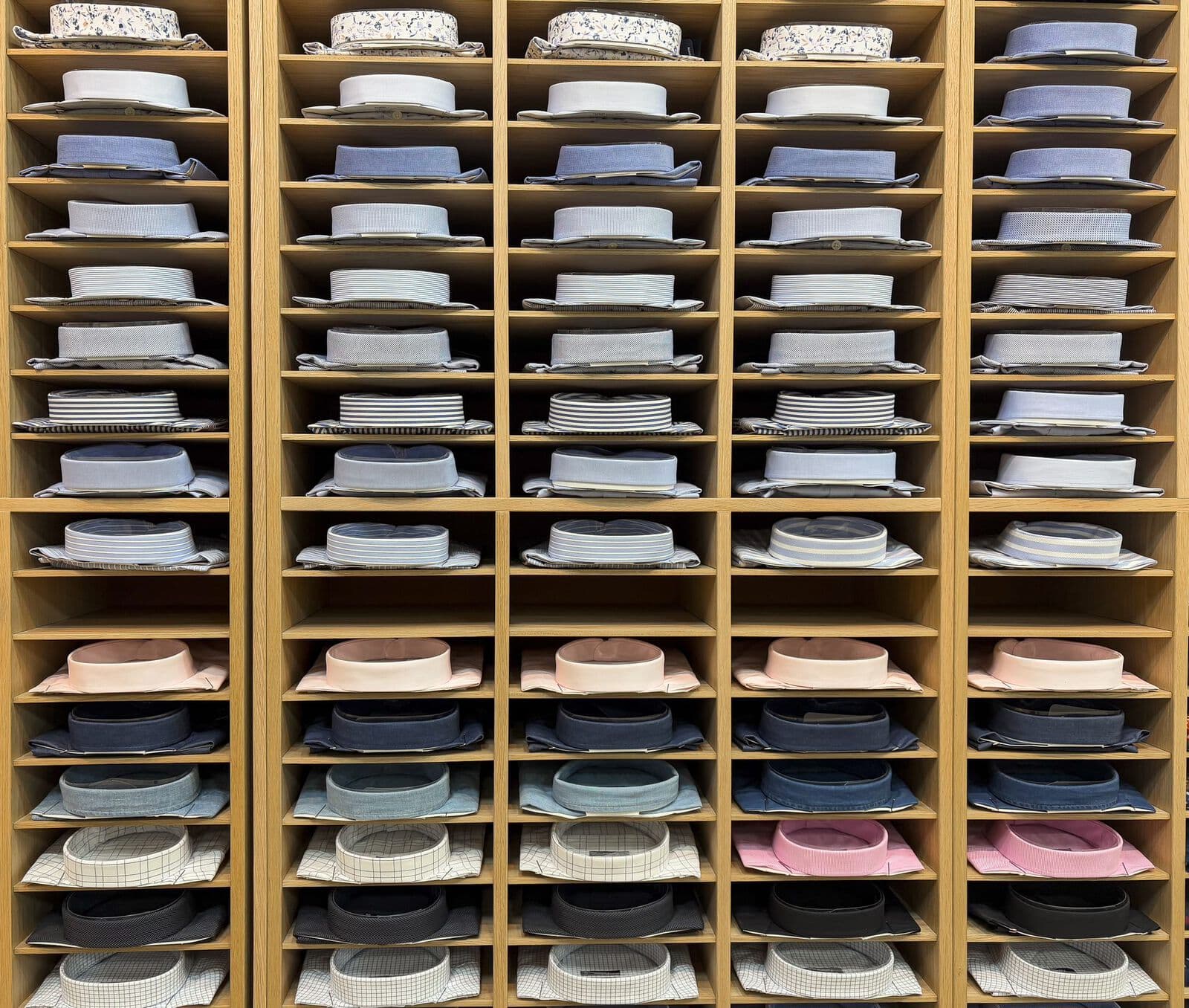
Products · Shirts
Shirt Manufacturer in Bangladesh: Dress, Casual and Overshirts in Woven Fabrics
We source woven shirts for menswear and unisex brands, retailers and uniform programs: oxford button-downs, poplin dress shirts, flannels, linen shirts and overshirts. Our sourcing team works with vetted woven factories in Bangladesh and manages fabric sourcing, sampling and inspection.
A woven shirt is a construction-heavy garment. Collar and cuff fusing, stitch density, seam type and pattern matching on stripes and checks all show at a glance, and they are where factories differ most. This page covers the fabrics most shirt programs use, the construction details that decide quality, easy-care finishing and the sampling sequence we follow.
Shirt quality is decided by construction
With woven shirts, the visible quality comes mostly from the collar, cuffs, placket and seams, so those details need the clearest specification. A good shirting fabric sewn poorly still looks cheap.
We review the collar first: point length, spread, stand height, fusing type and whether the collar takes stays. Then the cuffs, front placket and yoke. On striped and checked fabrics, pattern matching across the front, pockets, yoke and sleeves adds fabric consumption and sewing time, so state where matching is required.
Stitch density (stitches per inch, or SPI) is a useful indicator. Dress shirts are often specified with a finer, denser stitch than casual shirts, and single-needle construction at side seams and sleeves gives a cleaner finish.
Shirting fabrics and where they fit
| Fabric | Weave | Feel and look | Typical use |
|---|---|---|---|
| Poplin | Plain weave, fine yarns | Smooth, crisp, light | Dress and business shirts |
| Oxford and pinpoint oxford | Basket weave | Textured, durable, casual to smart | Button-down shirts |
| Twill | Diagonal weave | Soft drape, resists creasing | Dress and smart-casual shirts |
| End-on-end | Plain weave, alternating colored and white yarn | Subtle mottled surface | Business shirts |
| Chambray | Plain weave, colored warp with white weft | Denim-like look, lighter weight | Casual shirts |
| Flannel | Brushed twill or plain weave | Soft, warm, napped surface | Checked casual shirts and overshirts |
| Dobby and seersucker | Patterned or puckered weave | Texture without print | Summer and fashion shirts |
| Linen and linen blends | Plain weave | Breathable, natural slub, creases readily | Resort and summer shirts |
Construction details to specify
- Collar
- Button-down, spread, cutaway, point or band collar; fused or soft construction; removable stays.
- Cuffs
- Barrel, convertible or French cuffs, with button count and gauntlet placket style.
- Front placket
- Classic placket, French front or concealed placket; buttonhole spacing per size.
- Yoke and back
- Single or split yoke, box pleat, side pleats or a plain back.
- Seams and SPI
- Single- or double-needle seams, felled side seams and target stitches per inch.
- Buttons
- Polyester, corozo or shell-effect buttons, thickness, holes and thread cross pattern.
Easy-care and non-iron finishes need testing
Wrinkle-resistant and non-iron finishes typically use resin treatments. These can affect fabric strength and may release formaldehyde, which is restricted or subject to labeling in several markets. Specify the finish, require testing for formaldehyde and tear strength, and check the market requirements on our country pages.
Shirt sampling sequence
- 01
Fabric selection
Choose from mill swatches or develop yarn-dyed checks and stripes, which need their own color approvals.
- 02
Fit sample
Checks body, sleeve, collar and cuff measurements and overall proportion.
- 03
Collar and cuff sign-off
Fusing, stand height and point shape are approved on the actual fabric.
- 04
Wash test
Checks shrinkage, seam puckering and fusing bubbling after laundering.
- 05
Size set and PP sample
Confirms grading, pattern matching and all trims before bulk cutting.
Frequently asked questions
What is the MOQ for custom shirts?
Shirt MOQs depend heavily on fabric. Stock fabrics from mill collections usually allow lower minimums than custom yarn-dyed checks or stripes, which are woven to order. The garment factory's own minimum applies on top. We confirm the MOQ in the quotation.
How long does woven shirt production take?
Shirt samples commonly take two to four weeks per round. Bulk production often runs eight to twelve weeks after PP approval when fabric is developed to order, and can be shorter with stock fabrics. The schedule is confirmed in the quotation.
Can factories match checks and stripes?
Yes, but it should be specified. State where matching is required, for example front placket, pockets, yoke and sleeves. Matching increases fabric consumption, which affects cost.
Why do collars bubble after washing?
Bubbling usually comes from fusing that is incompatible with the fabric or applied at the wrong temperature, pressure or time. It is checked in wash tests during sampling, and fusing parameters are confirmed before bulk.
Can you source linen shirts?
Yes. Linen and linen-cotton blends are widely used for summer shirts. Some linen fabrics may be imported, which can extend lead time. Linen creases and shrinks readily, so wash testing is important.
Related products
Services for this category
Buyer guides
Get pricing for your shirt program
Send your shirt spec or reference garment, fabric preferences, collar and cuff details and quantities per color. We will shortlist suitable woven factories and share a sampling plan with indicative costs.