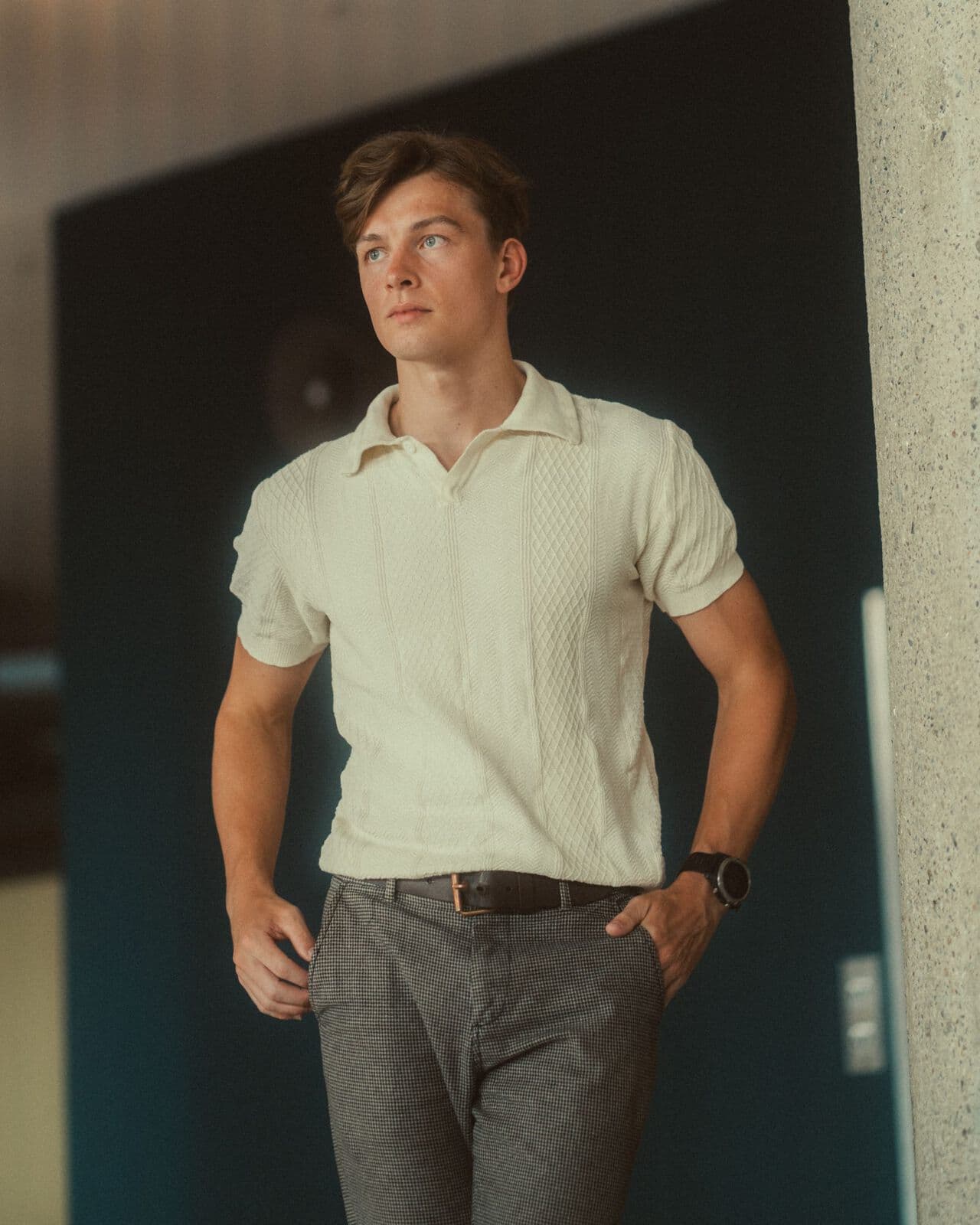
Products · Polo Shirts
Polo Shirt Manufacturer in Bangladesh: Pique, Performance and Corporate Polos
We source polo shirts for fashion labels, retailers, golf and sports brands and corporate uniform programs. Our sourcing team works with knit factories in Bangladesh that have flat-knit collar capacity, placket expertise and in-house or nearby embroidery, and we manage the order from sampling to final inspection.
A polo looks simple but has more components than a T-shirt: a knitted body, a separately knitted collar and cuffs, a sewn placket with interlining, buttons and usually a logo. Most quality issues come from how those parts are matched and assembled. This page covers the fabric, collar and placket choices that matter, and how we help you get them right in sampling.
Why polos need a specialist knit factory
Polo shirts need a factory that can control several components at once: pique or jersey body fabric, flat-knit collars and cuffs, the placket, buttons and decoration. A factory that produces good T-shirts is not automatically strong on polos.
The placket is the most visible test of workmanship. It should sit flat and straight, with even topstitching, square or neatly curved ends and interlining that does not bubble after washing. Collars should keep their shape and points without curling, and the collar stand should sit evenly around the neck.
When we match factories for a polo program, we look at their collar knitting setup, placket attachment process, embroidery capacity and the polos they currently produce for other buyers, not just their T-shirt output.
Polo fabric options
Pique is the traditional polo fabric, but jersey and polyester performance knits are common for fashion and sports programs.
| Fabric | Structure | Weight commonly used | Notes |
|---|---|---|---|
| Single pique | Textured knit with a fine honeycomb face | 180–220 GSM | Classic everyday polo; breathable and practical |
| Double pique | Heavier, more pronounced texture | 200–240 GSM | More structure and a more premium look |
| Mercerized cotton pique | Cotton treated for luster and smoothness | 180–220 GSM | Sharper color and sheen; higher fabric cost |
| Cotton or cotton-elastane jersey | Smooth single jersey | 170–210 GSM | Fashion and slim-fit polos with a softer drape |
| CVC or poly-cotton pique | Cotton-polyester blend | 190–230 GSM | Lower shrinkage and good wash durability for uniforms |
| Polyester or poly-elastane knit | Performance pique, mesh or jersey | 140–190 GSM | Golf and sports polos; often given moisture-management finishes |
Collar, placket and finishing details to specify
- Flat-knit or self-fabric collar
- Flat-knit collars and cuffs are knitted to shape on flat machines and are standard for classic polos. Self-fabric collars, cut from the body fabric, suit jersey and casual polos.
- Tipping
- Contrast stripes on collar and cuffs are knitted in, so tipping colors need their own yarn dye approvals.
- Placket length and closure
- Choose two- or three-button plackets, hidden button plackets, zip necks or open Johnny collars. State placket length and width per size.
- Placket construction and interlining
- Specify interlining type and weight. Too heavy and the placket stiffens; too light and it ripples after washing.
- Side vents and hem
- Side vents with a tennis tail (longer back) are common on classic polos; straight hems suit fashion and corporate styles.
- Buttons
- Dyed-to-match polyester buttons are standard. Engraved, branded or contrast buttons need separate sourcing time.
Matching collar color to body color
Flat-knit collars are usually knitted from dyed yarn, while the body fabric is dyed as fabric. The two processes can produce slightly different shades of the same color. Approve lab dips for both the body and the collar yarn against one color standard, and review them side by side under the same light source before bulk.
What gets approved during polo sampling
- 01
Body and collar lab dips
Color approval for body fabric, collar and cuff yarn, and any tipping colors.
- 02
Fit sample
Checks measurements, collar spread, placket length and sleeve opening.
- 03
Embroidery sew-out
The logo is stitched on the actual fabric so you can approve size, density and backing. Dense logos on pique can pucker if the backing is wrong.
- 04
Wash test
Confirms shrinkage, collar curling and placket stability after laundering.
- 05
PP sample
Made with bulk fabric, collars, buttons and labels; this becomes the production reference.
Frequently asked questions
What is the typical MOQ for custom polo shirts?
Minimums are usually set per color, because the body fabric and the flat-knit collars are both produced per color. Many factories are more flexible on stock colors than on custom shades. We confirm the MOQ in the quotation and can suggest ways to combine sizes or colors to reach it.
Can you produce embroidered corporate polos?
Yes. Many partner factories have in-house embroidery or work with nearby embroidery units. We approve a sew-out on the bulk fabric before production. Corporate programs often add size-by-size packing and reorder planning; see our corporate uniforms page.
Why do polo collars curl, and how is it reduced?
Curling usually comes from collar knitting tension, yarn choice, collar size relative to the neckline or inadequate finishing. It can be reduced through collar specification, correct finishing and wash testing in sampling. We include collar appearance after washing in our checks, though some movement in cotton collars is normal.
Can you make performance polos for golf or sport?
Yes, using polyester or poly-elastane knits, often with moisture-management finishes. Any performance claims, such as moisture wicking or UV protection, should be supported by test data from a recognized lab.
How long does polo production take?
Sampling usually takes two to four weeks per round. Bulk production is commonly in the range of seven to eleven weeks after PP approval, as collars, buttons and embroidery add steps. The schedule is confirmed in the quotation.
Related products
Services for this category
Buyer guides
Request a polo shirt quotation
Share your polo spec or reference garment with fabric, collar style, placket, logo and quantities per color. We will match suitable partner factories and send back a sampling plan and indicative pricing.