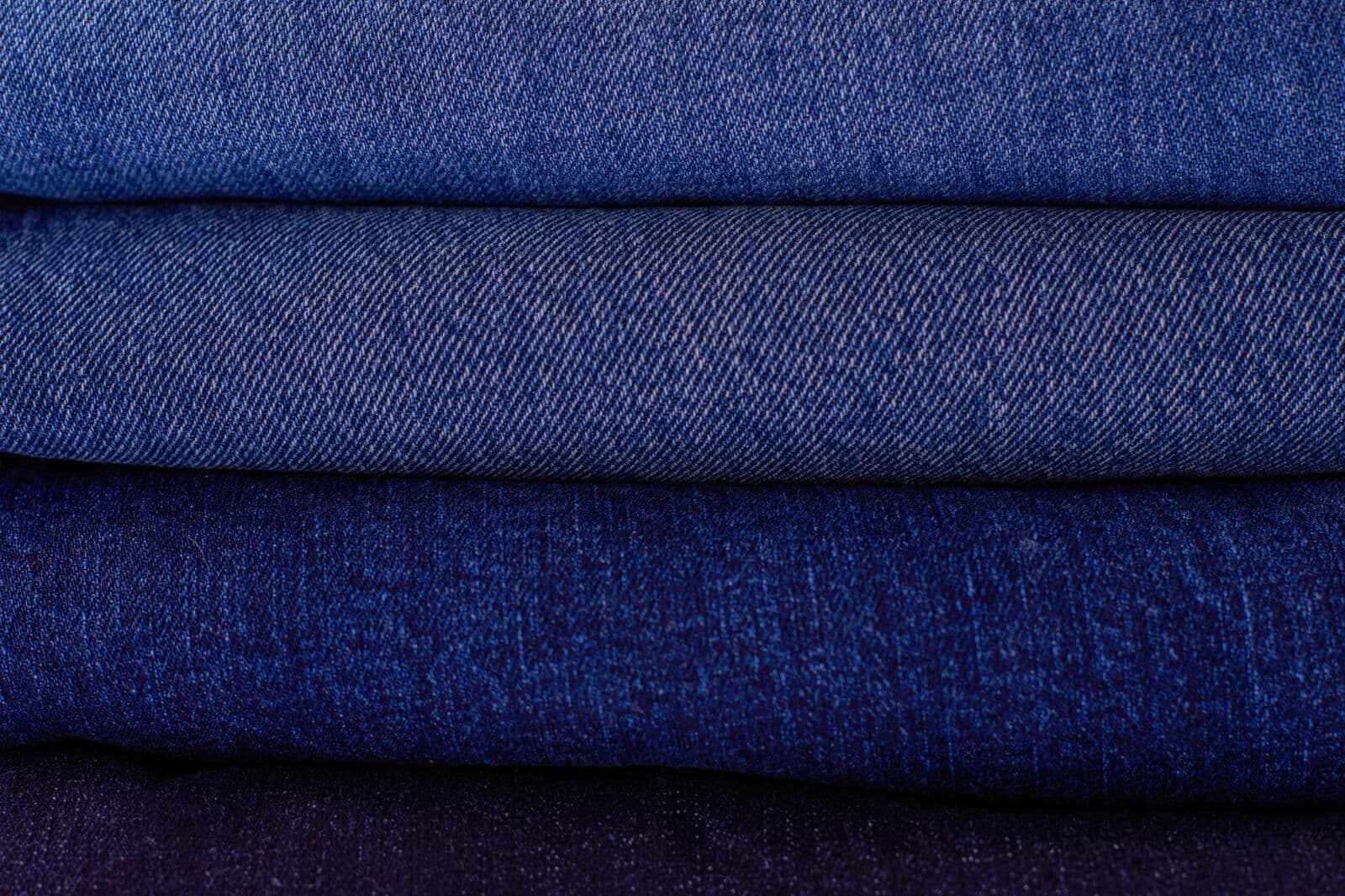
Products · Denim
Denim Manufacturer in Bangladesh for Jackets, Shirts, Skirts and Full Denim Programs
We help brands build denim programs in Bangladesh that go beyond jeans: trucker jackets, overshirts, skirts, dresses, overalls and shorts. Our sourcing team works with vetted denim garment factories and the mills that supply them, and we manage fabric selection, testing, washing and inspection.
Every denim program starts with the fabric. Weight, weave, yarn, dye and stretch decide how a garment looks, ages and fits, and they also affect lead time and cost. This page covers how to specify denim fabric, how to manage shade variation across a multi-garment program and how fabric origin can affect your import planning. For five-pocket fit and wash development, see our jeans page.
Start every denim program with the fabric
The fabric choice sets most of a denim garment's character before any washing is done. Specify it as precisely as you would a fit.
Bangladesh has local denim mills that supply many garment factories, which can shorten fabric lead times and simplify logistics. Some specialty fabrics, such as certain selvedge or high-performance stretch articles, may need to be imported, which adds time. When we shortlist factories, we look at the mills they already work with, their fabric testing setup and their washing capability, because the three are closely linked.
If you have a fabric you like, send a swatch or the mill article reference. Mills can often offer close alternatives from their own collections, which is usually faster than developing a new construction.
Denim fabric parameters to specify
| Parameter | Common options | Why it matters |
|---|---|---|
| Weight (oz/yd²) | Light 4–8 oz, mid 9–12 oz, heavy 13 oz and above | Light weights suit shirts and dresses; heavier weights suit jackets and workwear-style pieces |
| Weave | 3x1 right-hand twill, left-hand twill, broken twill, 2x1 | Twill direction affects surface texture and how the fabric fades |
| Yarn | Ring-spun, open-end, slub | Ring-spun and slub yarns give a more irregular, vintage fade |
| Dye | Rope or slasher indigo, sulfur black or gray, ecru, overdyed | Sets the base shade and how it reacts to washing |
| Stretch | Rigid, comfort stretch, high stretch, dual-core | Affects fit, recovery and pattern allowances |
| Finishing | Sanforized, coated, mercerized, overdyed | Controls shrinkage, surface look and handfeel |
| Width and edge | Wide-width or selvedge | Selvedge is narrower and less common, which affects cost and marker efficiency |
Denim garments beyond jeans
- Trucker and chore jackets
- Mid to heavy weights, rigid or comfort stretch, with shank buttons, flap pockets and topstitching in contrast thread.
- Denim shirts and overshirts
- Light to mid weights and chambray; snap or button fronts, often enzyme-washed for softness.
- Skirts and dresses
- Lighter or stretch denim with attention to drape and seam bulk at waistbands and yokes.
- Overalls and jumpsuits
- Need hardware such as buckles and side buttons, and careful grading of torso length.
- Shorts and kidswear denim
- Kids' denim follows the same fabric logic plus child-safety rules on trims; see our kidswear page.
Shade variation is normal: manage it with shade bands
Indigo varies from roll to roll and lot to lot. The factory should sort fabric rolls into shade groups before cutting and keep every garment from one shade group, so panels within a garment match. For multi-garment programs, agree a shade band showing the acceptable light-to-dark range and ask for jackets, shirts and bottoms from one collection to be checked against the same band.
Fabric testing and approval for denim
- 01
Select hangers
Shortlist fabrics from mill hangers or develop to your spec, noting weight, composition and stretch.
- 02
Lab test the fabric
Typical tests cover weight, width, shrinkage, skew, stretch and recovery, tear and tensile strength and colorfastness to rubbing.
- 03
Blanket wash
A fabric panel is washed in your intended recipe to show shade and fade before garments are sewn.
- 04
Inspect bulk fabric
Bulk rolls are commonly inspected using a point system for defects before cutting.
- 05
Shade sort and cut
Rolls are grouped by shade and cut in groups to keep each garment consistent.
Fabric origin and trade preferences
Where the fabric is made can matter for preferential rules of origin under schemes such as the EU's Everything But Arms (EBA) arrangement or the UK's Developing Countries Trading Scheme (DCTS). Bangladesh is scheduled to graduate from UN Least Developed Country status on 24 November 2026, and preference schemes have or may have transition arrangements. Verify current eligibility and origin rules with the official source or a licensed customs broker before costing. Our importing from Bangladesh guide gives an overview.
Frequently asked questions
What denim weights are common for jackets and shirts?
Jackets commonly use mid to heavy weights, roughly 11–14 oz, while shirts and dresses usually use lighter denim or chambray, roughly 4–8 oz. These are typical ranges, not rules; the right weight depends on the style and wash.
Can I nominate my own denim mill?
Yes. Many brands nominate fabric, and the garment factory buys it on your behalf or you supply it. Nominated fabric needs clear agreement on ordering, testing responsibility and lead time. We can coordinate this with the factory.
What sustainable denim options are available?
Options include organic or recycled cotton blends, lyocell blends, and finishing with laser and ozone to reduce water and chemical use. Fiber claims should be backed by certificates covering your supply chain. See our sustainable textiles guide.
What is the MOQ for a denim program?
Garment MOQs depend on the factory, but denim mills also set fabric minimums per article and color, and washing adds per-recipe minimums. Using one fabric across several garments can help reach fabric minimums. The MOQ is confirmed in the quotation.
How long do denim programs take?
Fabric selection and wash development often add time before bulk starts. As a rough guide, sampling may take three to six weeks including washes, and bulk commonly runs eight to twelve weeks after PP approval, longer for imported fabric. The schedule is confirmed in the quotation.
Related products
Services for this category
Buyer guides
Build a denim program around the right fabric
Share your garment list, fabric references and target washes. We will propose partner factories and mill options, plan fabric testing and set out a development timeline for your review.