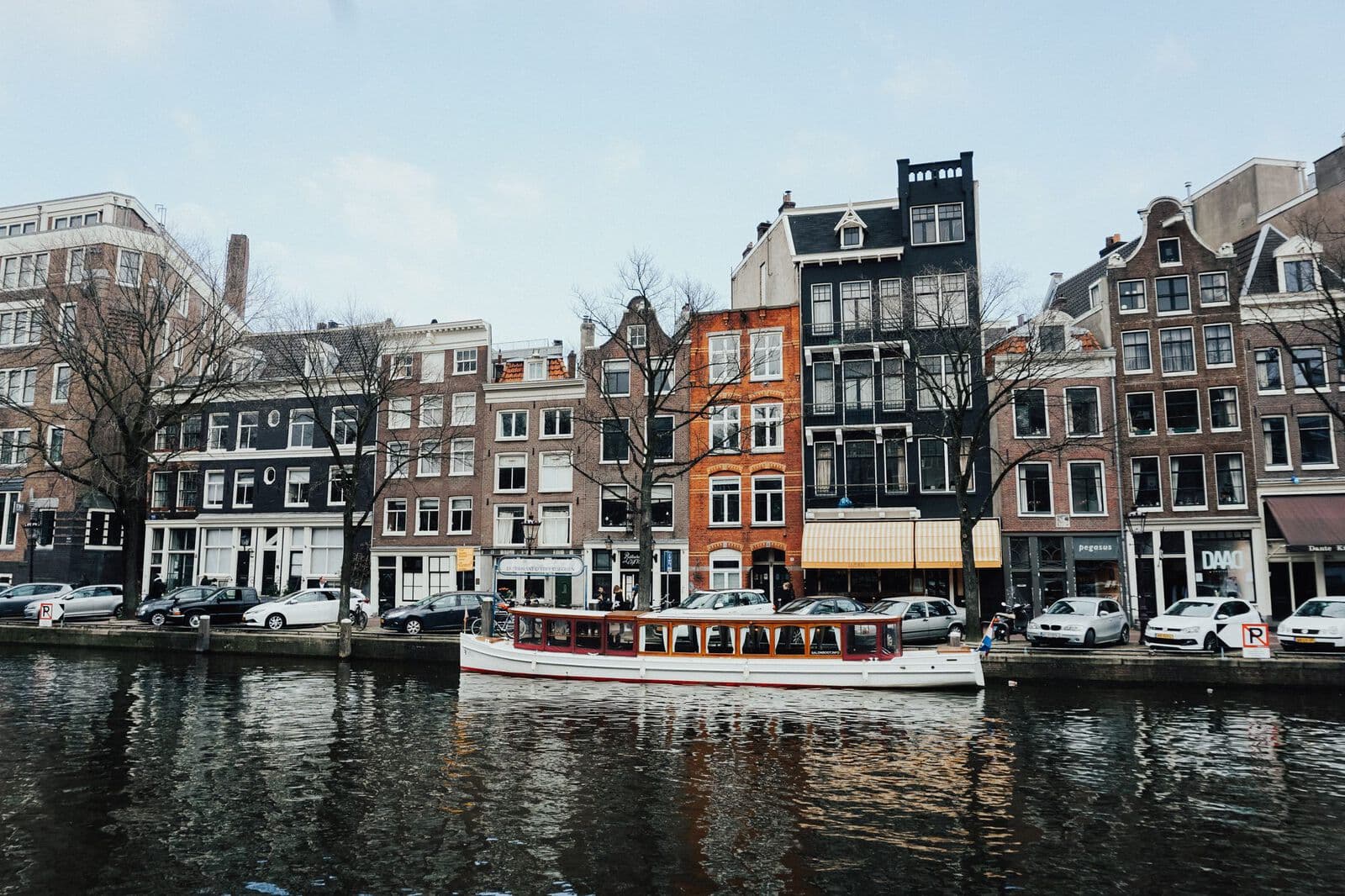
Garment sourcing for the Netherlands
Garment Sourcing from Bangladesh for Dutch Brands and Distributors
The Netherlands plays two roles for garment importers: a home market with its own extended producer responsibility scheme for textiles, and a logistics gateway, through Rotterdam and Dutch distribution centers, for the wider EU. Both shape how a Bangladeshi order should be planned, from label languages to which company acts as importer, producer and responsible operator. Our sourcing team works with partner factories that we verify before use and coordinates sampling, production, inspection and shipping documents.
This page outlines the points Dutch buyers raise most often. It is not legal or tax advice; check current requirements with official sources and your customs agent.
Buyer requirements to plan for in Netherlands
A practical overview, not legal advice. Requirements depend on the product, the importer and current rules, so confirm them with the official source or your customs broker.
- Textile EPR (UPV Textiel)
- Since 1 July 2023, the Dutch decree on extended producer responsibility for textiles has required producers and importers placing covered clothing and household textiles on the Dutch market to take responsibility for collection, reuse and recycling. Most join the producer responsibility organization Stichting UPV Textiel, report volumes and pay fees. Targets step up over time, so check the current scope.
- Composition labeling in Dutch
- Regulation (EU) No 1007/2011 sets fiber names and composition rules, and composition information is generally expected in Dutch for products sold in the Netherlands. Brands distributing across the Benelux often use multilingual labels covering Dutch and French, plus German if they sell in Germany.
- Product safety
- The General Product Safety Regulation (EU) 2023/988 applies directly. Each product needs an EU-based responsible economic operator, product and batch identification, and safety information consumers can understand. The Netherlands Food and Consumer Product Safety Authority (NVWA) handles market surveillance for many consumer products.
- Chemicals
- REACH Annex XVII restrictions apply, including azo dyes, nonylphenol ethoxylates in washable textiles and listed CMR substances in clothing, along with Candidate List communication duties. Agree an RSL and testing plan before bulk dyeing rather than testing only finished goods.
- Sustainability claims
- The Authority for Consumers and Markets (ACM) publishes guidelines on sustainability claims and has taken action on claims in the clothing sector. From 27 September 2026, Directive (EU) 2024/825 further restricts generic environmental claims and self-created sustainability labels, so keep certificates and transaction evidence for every claim.
- Responsible business conduct
- Dutch policy on international responsible business conduct (IMVO, or IRBC in English) expects companies to follow the OECD Guidelines and carry out risk-based due diligence. Many Dutch garment buyers expect suppliers to support risk assessment, remediation and grievance access. National legislation has been discussed alongside EU rules; verify current status.
Trade and duty context
Dutch importers apply EU trade rules, and as of November 2026 Bangladesh benefits from the Everything But Arms arrangement, which has generally meant duty-free access for goods that meet the GSP rules of origin (verify current status).
- After graduation: with LDC graduation scheduled for 24 November 2026, the GSP regulation provides a transition period before EBA treatment ends. What follows depends on the GSP rules in force at that point.
- REX statements: preference is generally claimed on a statement on origin from an exporter registered in the REX system. Check the REX number and statement wording before the goods ship.
- Customs warehousing: if goods sit in a Dutch customs warehouse and are released later, duty is generally assessed on release for free circulation, so keep origin documents with the stock records.
- Tariff lookup: knitted garments generally fall under Chapter 61 and other garments under Chapter 62 of the Combined Nomenclature; check current measures in the EU TARIC database.
Imports are declared to Dutch Customs (Douane), usually by a customs agent. An Article 23 license can move import VAT to the VAT return; ask your tax adviser. We do not quote duty rates.
Shipping from Bangladesh
Rotterdam is the main sea gateway for Dutch-bound garments, and Amsterdam Schiphol handles much of the air freight from Dhaka.
- Ocean: cargo leaves Chattogram on feeder vessels to hubs such as Colombo or Singapore, then joins mainline services to Rotterdam. Routings via the Cape of Good Hope, common since late 2023, lengthen schedules; check current rotations.
- Transit time: port-to-port ocean transit typically sits in a broad range of around five to eight weeks; air freight usually takes several days.
- Onward distribution: from Rotterdam, containers move by barge, rail or truck to Dutch and other EU distribution centers, which is why many brands consolidate EU stock in the Netherlands.
- Consolidation: where timelines allow, we align cargo readiness across partner factories so your forwarder can consolidate at origin.
FOB Chattogram is the usual basis for sea freight. Documents generally include the commercial invoice, packing list, bill of lading and REX statement on origin. See export coordination.
Why the Netherlands is often the EU entry point
Many brands route Bangladeshi garments through the Netherlands because Rotterdam is Europe's largest container port and the country has a dense network of customs warehouses, fiscal representatives and EU fulfillment centers. Goods can be cleared on arrival or held in a customs warehouse and released as orders ship, depending on your setup.
That creates a practical question for every program: which company is the importer of record, which is the producer under UPV Textiel for Dutch sales, and which is the EU responsible operator under the GPSR. They do not have to be the same entity, but labels, packaging and paperwork must name the right ones. Settle this before label artwork is final.
Dutch and EU requirements for garment imports
| Requirement | What it covers | What to prepare |
|---|---|---|
| UPV Textiel (Dutch textile EPR) | Producer responsibility for covered textiles sold in the Netherlands | Membership of a producer responsibility organization, volume reporting by product type |
| Regulation (EU) No 1007/2011 | Fiber names and composition | Dutch composition text, multilingual layout for Benelux or EU-wide sales |
| GPSR (EU) 2023/988 | Product safety, EU responsible operator, online listing information | Operator name and contact on product or packaging, batch codes, safety assessment |
| REACH Annex XVII and Candidate List | Restricted and very high concern substances | RSL in the contract, test reports per shade and print |
| EU Forced Labour Regulation (EU) 2024/3015 | Ban on products made with forced labor, applying from December 2027 | Supply chain map to fiber level, supplier declarations, audit and remediation records |
| Customs and VAT | Import declaration, duty and import VAT | EORI number, customs agent mandate, Article 23 license or fiscal representative if relevant |
How we prepare orders for Dutch and EU distribution
These tasks run alongside normal sampling and production follow-up.
- Label language and operator details
- We lay out multilingual composition and care labels and confirm the EU operator details printed on product or packaging.
- EPR-ready product data
- We record garment weights and fiber compositions per style, which can support EPR volume reporting.
- Cartons built for EU fulfillment
- Factories are briefed on carton dimensions, weight limits, barcode labels and pre-packing for your distribution center or marketplace.
- Due diligence file
- Audit reports, building safety status, subcontracting declarations and mill details are collected per order for your IMVO risk assessment.
- Inspection before loading
- Final quality inspection to your AQL happens in Bangladesh, so issues are fixed at the factory rather than in a Dutch warehouse. Dhaka is four to five hours ahead of the Netherlands, which leaves a useful overlap in your morning.
Preferences and EU textile rules are changing
Bangladesh's Everything But Arms status, the transition after its LDC graduation scheduled for 24 November 2026 and the renewal of the EU GSP may all affect duties on future orders. EU-wide textile EPR under the revised Waste Framework Directive will also be phased in through national schemes. Verify current rules with official EU and Dutch sources and your customs agent before confirming landed costs.
Frequently asked questions
Does UPV Textiel apply if we import into the Netherlands but sell elsewhere in the EU?
UPV Textiel concerns products made available on the Dutch market. Goods passing through for sale in other countries may instead fall under those countries' EPR rules as they are introduced. Check the scope with Stichting UPV Textiel or your adviser based on where your end customers are.
Who should be the EU responsible operator under the GPSR?
It can be an EU-established manufacturer, the importer, an authorized representative or a fulfillment service provider, depending on your setup. A Bangladeshi factory cannot fill the role because it is not established in the EU. Agree this before label artwork is final.
Do Dutch buyers require specific audits?
There is no single required audit. Dutch buyers commonly work with amfori BSCI, Fair Wear membership requirements or other recognized audits, alongside their own IMVO risk assessments. We share factory reports, collect corrective action evidence and explain any gaps.
Can we keep goods in a customs warehouse in the Netherlands?
Yes, customs warehousing is widely used, so duty and import VAT are generally due only when goods are released for free circulation. Conditions depend on your warehouse provider and authorization; your customs agent can explain the options.
Sources and references
- Extended producer responsibility for textiles, Government of the Netherlands
- Regulation (EU) No 1007/2011, GPSR (EU) 2023/988 and Forced Labour Regulation (EU) 2024/3015, EUR-Lex
- REACH restrictions and Candidate List, European Chemicals Agency
- Guidelines on sustainability claims, Authority for Consumers and Markets (ACM)
- Customs and import VAT, including the Article 23 license, Belastingdienst / Douane
- EU customs tariff (TARIC), European Commission
Regulations, tariffs and preference schemes change. Always confirm current requirements with the official source or a licensed customs broker.
Products buyers source
Services that help
Guides
Plan EU-ready orders through the Netherlands
Tell us your products, volumes and distribution setup, and we will propose partner factories, a labeling and documentation plan and shipment options to review with your forwarder.