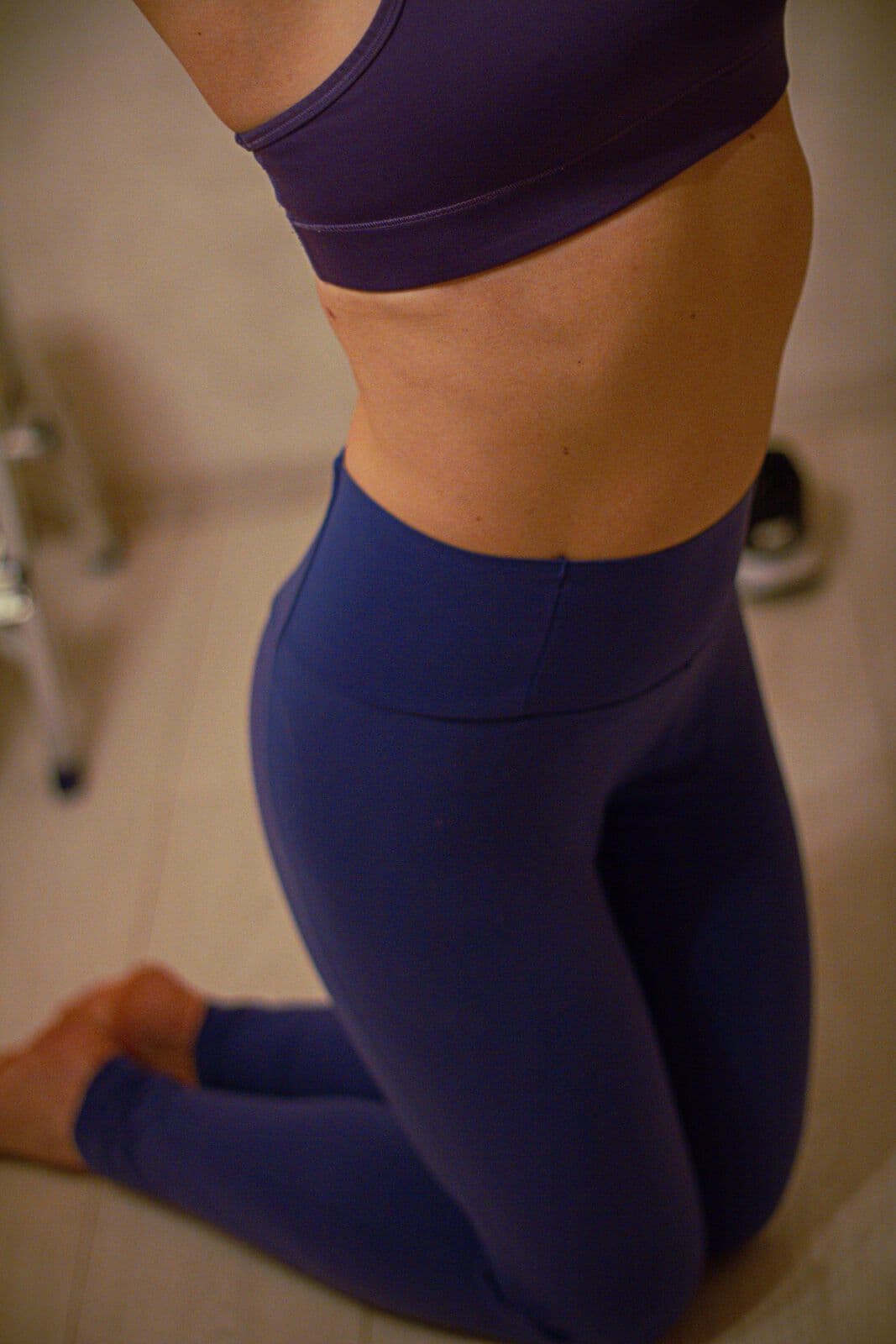
Products · Activewear
Activewear Manufacturer in Bangladesh for Leggings, Sports Bras and Studio Wear
We source activewear for fitness, yoga and athleisure brands: leggings, sports bras, bike shorts, tanks, training tops and co-ord sets. Our sourcing team works with vetted partner factories in Bangladesh that have stretch-fabric sewing experience, including flatlock and coverstitch machinery and bonding equipment, and we manage development through inspection.
Activewear is a stretch-fabric engineering category. Fabric choice, stretch ratio, opacity and recovery decide whether leggings perform or fail, and the pattern must be built around how the fabric stretches. This page covers fabrics, construction details, the opacity and recovery tests to insist on, and how we approach fit testing. For team kits and tracksuits, see our sportswear page.
Activewear performance starts with the fabric
Activewear fabric choice determines feel, compression, opacity and durability before any design work. Most programs use nylon-elastane or polyester-elastane knits, each with different strengths.
Nylon-elastane fabrics tend to feel softer and smoother, which suits premium leggings and studio wear. Polyester-elastane fabrics are often more cost-effective, take sublimation printing and dry quickly. Elastane content and fabric weight together control compression, from light-support lounge pieces to high-compression training leggings.
Some specialized activewear fabrics are imported into Bangladesh rather than knitted locally, which can add time. We confirm fabric source and lead time with the factory during costing so your schedule reflects it.
Activewear fabric options
| Fabric | Feel | Stretch and support | Typical use |
|---|---|---|---|
| Brushed nylon-elastane jersey | Very soft, peached surface | Light to medium compression | Yoga leggings and studio sets |
| Nylon-elastane warp knit | Smooth, cool, dense | Medium to high compression | Training leggings and sports bras |
| Polyester-elastane interlock | Smooth, slightly crisp | Medium support | Leggings, shorts, printed styles |
| Power mesh | Light, open | Firm, supportive | Bra linings and ventilation panels |
| Cotton-elastane jersey | Natural, soft | Light support | Lounge and low-impact wear |
| Seamless circular knit | Body-mapped textures | Zoned support | Seamless leggings and bras |
| Recycled nylon or polyester blends | Similar to virgin equivalents | Varies by construction | Any of the above |
Construction details to specify
- Seams
- Flatlock seams lie flat against the skin; coverstitch and overlock suit other areas. Name the seam type per seam.
- Gusset
- A diamond or triangular crotch gusset improves movement and reduces seam stress.
- Waistband
- Height, layers, elastic or no elastic, internal drawcord and hidden pockets.
- Bonded and laser-cut finishes
- Raw-cut, bonded hems and seams give a clean look but need bonding equipment and testing for durability.
- Pockets
- Side drop-in pockets on leggings, back zip pockets, or key pockets in waistbands.
- Bra support
- Underband elastic, molded cups or removable pads, straps and adjustability.
Test opacity and recovery before bulk
See-through leggings are one of the most common activewear complaints. Ask for an opacity check with the fabric stretched, in the deepest squat position, on every color, because light colors behave differently. Also test stretch and recovery, pilling, and colorfastness to perspiration and washing on bulk fabric. Our fabric guide explains common test methods.
How we approach activewear fit testing
- 01
Fabric stretch test
Measure stretch and recovery so the pattern-maker can set the right reduction in the pattern.
- 02
Base pattern
The factory builds or adjusts the base pattern to the fabric's stretch.
- 03
Fit on a body
Samples are fitted on a model, not only on a form, because activewear is shaped by the body.
- 04
Movement test
Squats, lunges and stretches check opacity, waistband slip and seam comfort.
- 05
Wash and re-fit
Garments are washed and re-tried to check shrinkage and recovery.
- 06
Graded size set
Every size is reviewed before PP approval.
Frequently asked questions
What is the MOQ for custom activewear?
Fabric minimums per color usually drive the MOQ, especially for imported or custom-developed fabrics. Factories also set per-style minimums. Using stock fabric colors can help. The MOQ is confirmed in the quotation.
Can you produce seamless activewear?
Seamless activewear needs specialized circular knitting machines, which only some factories operate. Share your style early and we will check capacity among partner factories.
Are activewear fabrics made in Bangladesh?
Some are knitted locally, while many premium nylon-elastane fabrics are imported. Imported fabric adds lead time and may affect origin considerations, so we confirm the source in costing. See our importing from Bangladesh guide.
Can I develop my own printed activewear?
Yes. Polyester-based fabrics can be sublimated with your prints; nylon fabrics usually need other print methods. Print strike-offs are approved on stretched fabric to check distortion.
How long does activewear development take?
Development can take longer than basics because of fit testing. Plan for several weeks of sampling, and bulk production commonly runs eight to twelve weeks after PP approval, longer with imported fabric. The schedule is confirmed in the quotation.
Related products
Services for this category
Buyer guides
Develop your activewear line
Share your styles, fabric references, support levels and target quantities. We will shortlist partner factories with stretch-fabric expertise and plan fit testing around your launch.