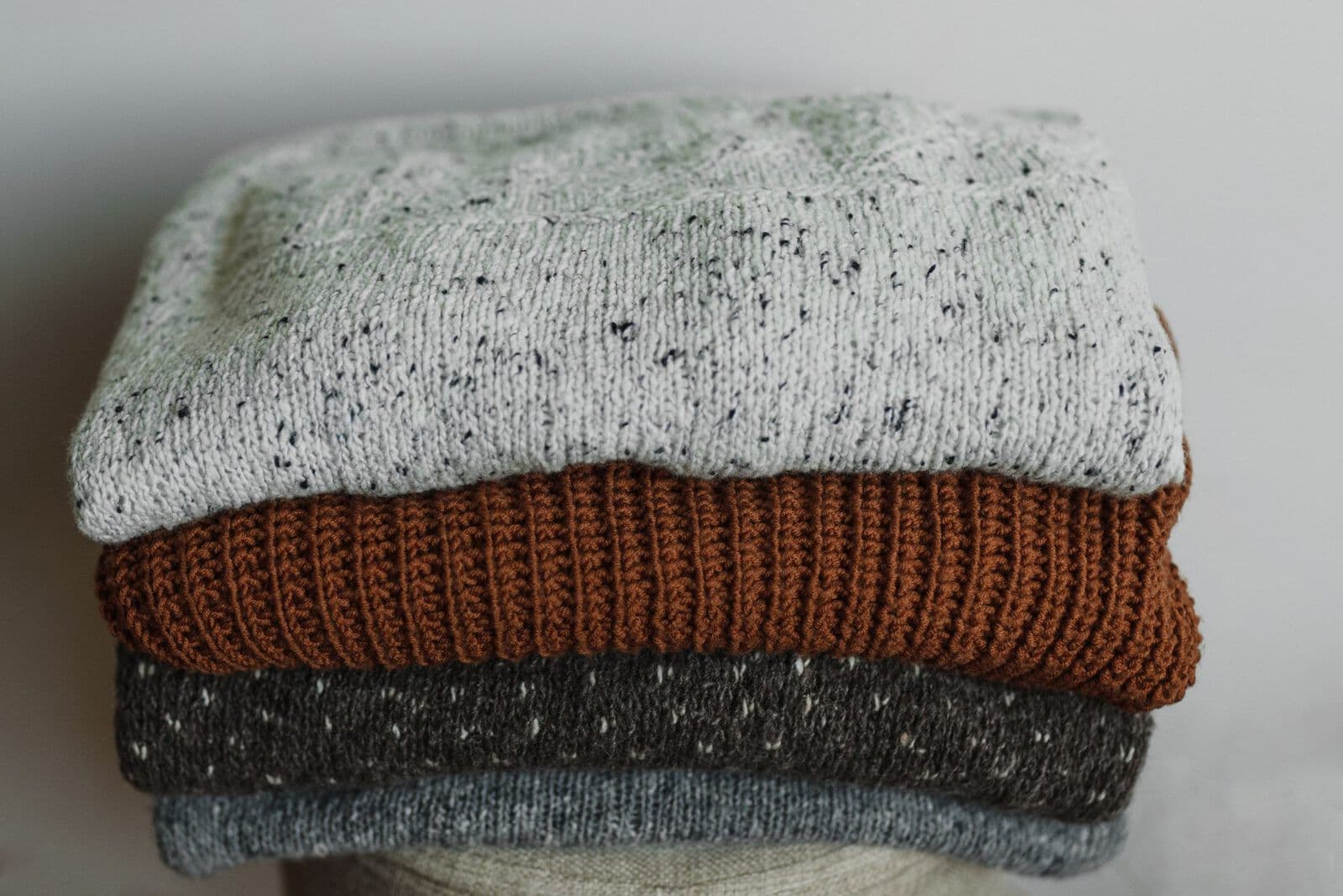
Products · Sweaters
Sweater Manufacturer in Bangladesh for Seasonal Pullover and Cardigan Programs
We source sweaters for retailers, wholesalers and private label brands: crewnecks, V-necks, turtlenecks, cable knits, cardigans and sweater vests. Our sourcing team works with vetted sweater factories in Bangladesh and manages yarn booking, sampling, production follow-up and inspection.
Sweaters are a seasonal business. Most programs must land in a narrow autumn and winter selling window, so planning yarn and capacity early matters as much as the design. This page focuses on the commercial side of sweater sourcing: timing, how sweaters are costed, the defects to watch for and how to handle care labeling for wool and blends. For gauge, stitch and yarn engineering, see our knitwear page.
Plan sweater programs around yarn timing
The earlier you confirm yarn, the more reliable your delivery. Sweater factories book capacity months ahead of the winter season, and custom yarn colors must be dyed before knitting can begin.
A practical approach is to finalize styles and yarn qualities first, then lock colors as early as your range planning allows. Where colors cannot be confirmed early, some brands reserve undyed yarn or capacity and confirm shades later; the factory will advise what is practical.
Carry-over styles from a previous season are faster to reorder, because the program, measurements and yarn are already approved. Building a core of carry-over styles alongside new designs helps balance risk.
How sweaters are typically costed
Sweater prices are usually built up from yarn consumption plus processing. Understanding the elements helps you make informed trade-offs.
| Cost element | What drives it | How to manage it |
|---|---|---|
| Yarn | Garment weight, fiber and yarn price per kilogram | Adjust gauge, stitch or weight; compare yarn qualities |
| Knitting | Gauge, stitch complexity, number of colors | Simplify jacquards or use texture instead of color |
| Linking and assembly | Number of panels, trims, pockets | Reduce separate components where possible |
| Washing and finishing | Softening, brushing, special washes | Agree a standard finish for the range |
| Trims and packaging | Buttons, zips, labels, polybags | Standardize trims across styles |
| Testing | Market and brand test requirements | Agree a test plan per yarn quality, not per style |
Common sweater defects we inspect for
- Holes and dropped stitches
- Usually from knitting faults or yarn breaks; checked panel by panel and on finished garments.
- Uneven tension and streaks
- Visible bands or lines in the knit, often from machine settings or yarn variation.
- Linking faults
- Skipped or uneven linking at necklines, shoulders and side seams.
- Measurement variance
- Knitwear relaxes after washing; measurements should be taken on relaxed garments.
- Pilling and fuzz
- Depends on fiber, yarn twist and finishing; tested to an agreed method and grade.
- Shade variation
- Differences between panels or between yarn lots, checked under consistent lighting.
From range brief to delivery
- 01
Range brief
Share styles, target prices, yarn ideas, quantities and in-store dates.
- 02
Yarn and swatch approval
Approve yarn quality, color and knitted swatches.
- 03
Proto and fit samples
Confirm shape, measurements and handfeel on relaxed garments.
- 04
Yarn booking
Bulk yarn is ordered and dyed once colors are confirmed.
- 05
PP sample and testing
Bulk yarn samples are tested for pilling, dimensional stability and colorfastness.
- 06
Production and inspection
Inline checks during knitting and linking, then a final inspection before shipping.
Care labels for wool and wool blends
Wool can felt and shrink in machine washing unless the yarn is treated for washability. Decide early whether a sweater should be hand-wash or machine-washable, choose the yarn accordingly and test to confirm the care instruction. Care labeling rules differ by market, for example the FTC Care Labeling Rule in the United States and ISO 3758 care symbols used widely in Europe. See our country pages for an overview.
Frequently asked questions
What is the MOQ for custom sweaters?
MOQs are commonly set per style and color, driven by yarn dyeing minimums and knitting setup. Stock yarn colors and carry-over styles usually allow lower minimums. The MOQ is confirmed in the quotation.
When should I place a winter sweater order?
As early as your range planning allows. Many brands confirm winter programs several months before delivery so that yarn can be dyed and capacity booked. We can work back from your in-store date to suggest a timeline.
Can sweaters be made machine-washable?
Many cotton, acrylic and blended sweaters can be, and wool can be treated for washability. The care instruction should be confirmed by wash testing on bulk yarn before labels are printed.
Should I choose acrylic or wool blends?
Acrylic and acrylic blends are cost-effective and color-stable. Wool blends add warmth and natural handfeel at a higher cost and need more care testing. The choice depends on price point, customer and positioning.
How can pilling be reduced?
Through fiber choice, longer staple fibers, higher yarn twist and suitable finishing. Some pilling is normal in many sweaters, so agree a test method and acceptable grade in your spec.
Related products
Services for this category
Buyer guides
Plan your next sweater season
Send your range brief with styles, yarn preferences, quantities and in-store dates. We will propose partner factories, a yarn and sampling timeline and indicative costing per style.